Manufacturing Start here Curated
When the Safety Case Moved Into Your Factory
Why ISO 10218-2:2025 Quietly Changed What Manufacturers Are Buying
Moving an industrial AI or robotics pilot into production: the safety case, the data and skills the plant needs, and the economics that decide whether it scales.
Start with When the Safety Case Moved Into Your Factory
Manufacturing Start here Curated
Why ISO 10218-2:2025 Quietly Changed What Manufacturers Are Buying
Physical AI
Physical AI is making robot skills cheaper to create faster than manufacturers can make those skills safe, repeatable, measurable, and certifiable.
Physical AI
Why World Labs just made real-world observation reusable, how it does it, and why that breakthrough still solves only half of the robotics problem.
Physical AI
Hardware, Not Logic, Is the True Humanoid Bottleneck
Automotive
Why the next competitive advantage in automotive and manufacturing AI will belong to whoever can validate and ship the fastest, not whoever trains the smartest model
Physical AI
Collaborative SLAM has been proven in demanding field trials. At fleet scale, it is still far from the default architecture.
Physical AI
NVIDIA’s robot safety stack splits between Linux and QNX, the same fight SDV compute just had.
Physical AI
Why physical AI shifts competitive advantage toward industrial incumbents, not away from them
Manufacturing
Manufacturing’s next crisis is not labor scarcity. It is the silent loss of operational memory accumulated over decades and never written down.
Physical AI
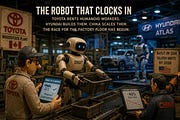
Humanoid robots are on the factory floor. The question is no longer whether they work. It is who gets to scale them first.
Manufacturing
The next productivity frontier in manufacturing is not in the office. It is on the shop floor.
Executive Briefings
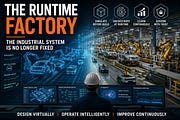
Physical AI entered production, simulation compressed development timelines by 70%, and the workforce crisis became the defining operational constraint of 2026. Here is the full picture.