Glossary · Automotive
ADAS and Autonomous Driving
132 terms in the Automotive glossary, each with its one-line definition.
132 terms, A to Z
- 4D Imaging Radar High-resolution car radar that also measures object height, helping it separate bridges from stopped cars and approach lidar-like detail.
- Adaptive Cruise Control ACC Cruise control that uses radar or a camera to hold a set gap to the car ahead, slowing and speeding up automatically.
- ADS-Dedicated Vehicle ADS-DV Vehicle built to be driven only by its automated driving system, often with no steering wheel or pedals, like a purpose-built robotaxi.
- Advanced Driver Assistance Systems ADAS Family of car features that warn of danger or help with steering, braking or speed while the human remains the driver.
- Advanced Driver Distraction Warning ADDW Driver-facing camera feature that warns when the driver looks away from the road too long, required on new cars in the EU.
- Assisted Driving Grading Euro NCAP rating of Level 2 assistance, graded Entry to Very Good, on system capability and how well it keeps drivers engaged.
- Auto-Labeling Using software instead of people to annotate recorded driving data so it can train self-driving models cheaply at scale.
- Automated Driving System ADS Hardware and software able to perform all of the driving for sustained periods within set conditions, as in Level 3 to 5 vehicles.
- Automated Lane Change ALC Function that changes lanes for the driver, either after the turn signal is used or on its own to pass slower traffic.
- Automated Lane Keeping System ALKS Level 3 highway function that keeps the car in lane in traffic while the driver may look away, regulated under UN R157.
- Automated Parking Assist APA Feature that steers, and often brakes and accelerates, to park the car in a space it has found, sometimes controlled from a phone.
- Automated Valet Parking AVP Driverless parking in which the car drives itself from a garage drop-off zone to a free space and back on request.
- Automatic Emergency Braking AEB System that brakes automatically when a crash with a vehicle, pedestrian or cyclist is imminent and the driver has not reacted.
- Autonomous Trucking Self-driving heavy trucks hauling freight without a driver, usually starting on long highway routes between freight hubs.
- Autoware Free open-source software for building self-driving vehicles, widely used by universities, startups and Japanese shuttle projects.
- Behavior Planning Self-driving software layer that makes tactical choices such as following, changing lanes, yielding or stopping before a path is computed.
- Bird's-Eye-View Perception BEV perception Approach that merges all camera views into one top-down map around the car, which simplifies sensor fusion and planning.
- Blind Spot Monitoring BSM Warning that lights a symbol near the side mirror when another vehicle is in the zone beside and behind the car.
- BYD God's Eye BYD's tiered driver assistance family, made standard on most of its models in 2025, bringing advanced ADAS to China's mass market.
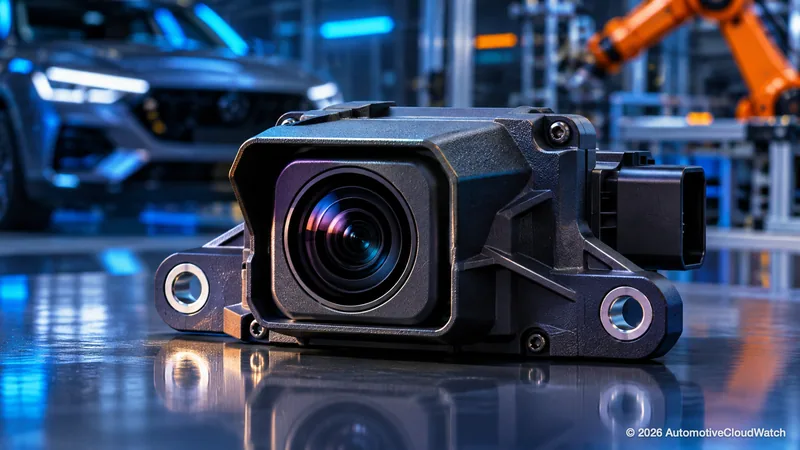 Camera Main sensor of most driver assistance systems, seeing lanes, signs, lights and road users in color but struggling in glare and bad weather.
- Car-to-Car Rear Scenarios CCR Euro NCAP emergency braking tests in which the test car approaches a stationary, slow or braking car from behind.
- City NOA Supervised Level 2 feature that follows the navigation route through city streets, handling lights, turns and intersections.
- Closed-Loop Evaluation Simulation testing in which the driving system's own decisions change what happens next, so errors build up as in real driving.
- Combined Driver Assistance China's official term for Level 2 systems that steer and control speed together while the driver keeps supervising.
- Crowdsourced Mapping Building and updating road maps from data uploaded by ordinary customer cars instead of dedicated survey vehicles.
- Data Engine Repeating loop in which fleet data is mined for failures, labeled, used to retrain driving software and shipped back to the cars.
- DDT Fallback Response when an automated feature fails or leaves its operating conditions, with a human taking over or the system stopping safely.
- Dead Reckoning Estimating position by adding up distance and direction traveled from a known point, which keeps navigation working in tunnels.
- Digital Lifeline Development Plan Japanese national plan led by METI to build shared digital infrastructure for automated driving, drones and infrastructure management.
- Disengagement Moment in self-driving testing when the automated system switches off because the safety driver took over or it handed back control.
- Driver Monitoring System DMS Infrared driver-facing camera that checks the driver is awake and watching the road, warning or limiting assistance if not.
- Driverless Operation Running an automated vehicle on public roads with nobody in the driver's seat, often with remote staff supervising the fleet.
- Driving Automation System Umbrella term for any vehicle system doing part or all of the driving on a sustained basis, from Level 1 to Level 5.
- Dynamic Driving Task DDT Everything a driver does moment to moment, such as steering, braking and watching for road users, but not trip planning.
- Edge Case Rare or odd road situation that a driving system has seen little of in training, such as debris or an unusual work zone.
- Electronic Horizon Map data about the road ahead, such as bends, slopes and limits, fed to vehicle controllers so they can prepare in advance.
- Emergency Lane Keeping ELK Safety function that steers the car back when it is about to drift into oncoming traffic, an overtaking car or off the road.
- End-to-End Driving E2E driving Self-driving approach in which one large neural network learns to map sensor input directly to driving decisions from human driving.
- Evasive Steering Assist ESA Feature that adds steering force to help the driver swerve around an obstacle in an emergency, and sometimes steers by itself.
- Eyes-Off Driving Automated driving in which the driver may stop watching the road while the system drives, which requires Level 3 or higher.
- Fallback-Ready User Person in the driver's seat of a Level 3 car who need not watch the road but must be able to take over quickly when asked.
- Field of View FOV Angular width and height of the area a sensor can see, traded off against how far and how finely it sees.
- Forward Collision Warning FCW Warning that alerts the driver with sound and light when the car is closing too fast on a vehicle or obstacle ahead.
- Free Space Detection Working out which areas around the car are clear to drive into, so even obstacles of unknown type are avoided.
- Frequency-Modulated Continuous-Wave Lidar FMCW lidar Lidar using a continuously frequency-swept laser to measure both the distance and the speed of every point directly.
- Full Self-Driving (Supervised) FSD Tesla's supervised driver assistance product for highways and city streets, which remains Level 2 in most markets despite its name.
- GB/T 40429 China's national standard defining driving automation Levels 0 to 5, closely following SAE J3016 with local differences.
- Global Navigation Satellite System GNSS General name for satellite positioning systems such as GPS, Galileo, GLONASS, BeiDou and QZSS.
- Ground Truth Correct reference answer, such as exact object and lane positions, used to train and grade perception software.
- Hands-Free Driving Level 2 mode letting the driver take hands off the wheel on approved roads while still watching the road at all times.
- Hands-On Detection HOD Sensor function that checks whether the driver is holding the steering wheel, so assistance can warn or switch off if not.
- High-Definition Map HD map Centimeter-accurate digital road map recording every lane, edge, sign and signal, used by automated cars to localize and plan.
- Highway Pilot General name for highway driving systems, which may be supervised Level 2 or eyes-off Level 3 depending on the product.
- Huawei Qiankun Huawei's brand for intelligent driving and vehicle control systems supplied to HIMA brands and other Chinese automakers.
- ICV Access and On-Road Pilot Chinese national program letting selected automakers sell Level 3 and 4 capable vehicles and run them on designated roads.
- Imitation Learning Training a driving AI to copy recorded expert human driving instead of programming the rules by hand.
- Inertial Measurement Unit IMU Sensor package of accelerometers and gyroscopes that measures how the car accelerates, brakes and turns.
- ISO 34501 International standard defining the basic vocabulary for scenarios used to test automated driving systems.
- ISO 34503 International standard giving common categories for describing the operational design domain of an automated driving system.
- Lane Centering Assist LCA Feature that steers continuously to keep the car centered in its lane, forming a Level 2 highway assistant with ACC.
- Lane Departure Warning LDW Warning by sound, display or wheel vibration when the car starts drifting out of its lane without the turn signal on.
- Lane Keeping Assist LKA Camera-based system that gently steers the car back when it drifts toward the lane edge by mistake.
- Lane Support Systems LSS Euro NCAP's group of features that prevent lane drifting, including departure warning, keeping assist and emergency lane keeping.
- Level 0 No Driving Automation L0 Lowest automation level, where the human does all the driving though warnings or brief interventions like AEB may help.
- Level 1 Driver Assistance L1 Automation level where the car helps with either steering or speed, but not both, while the driver does everything else.
- Level 2 Partial Driving Automation L2 Automation level where the car steers and controls speed together but the driver must watch the road and stays responsible.
- Level 2 Plus L2+ Marketing label, not an official level, for advanced Level 2 systems with extras such as hands-free or route-guided driving.
- Level 3 Conditional Driving Automation L3 Automation level where the car drives in certain conditions and the driver may look away but must take over when asked.
- Level 4 High Driving Automation L4 Automation level where the car drives itself fully within a defined area or conditions and handles any problem without a human.
- Level 5 Full Driving Automation L5 Highest automation level, where the car could drive anywhere a human could, with no limits on place, time or weather.
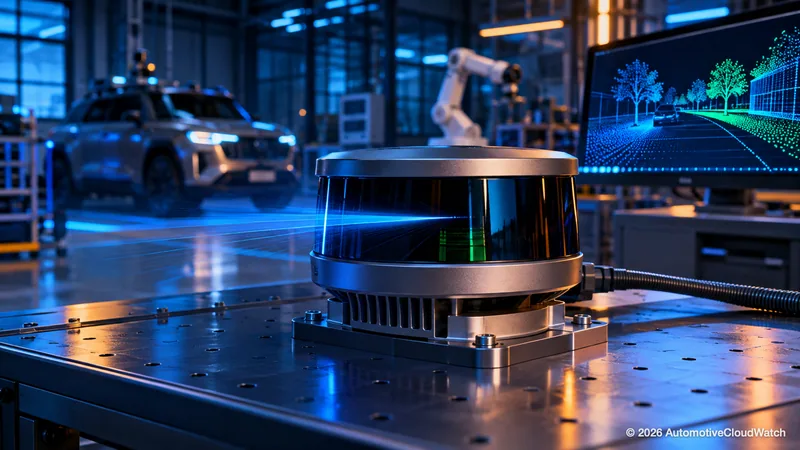 Lidar Sensor that times reflected laser pulses to build a precise 3D point picture of the surroundings, day or night.
- Localization Determining exactly where the car is and which way it points, often to about 10 centimeters, enough to know its lane.
- Mapless Driving Automated driving based on real-time sensing plus an ordinary navigation map instead of a prebuilt HD map.
- Minimal Risk Condition MRC Safe stopped state an automated system brings the car to when it cannot keep driving, such as an in-lane stop with hazards on.
- Model Predictive Control MPC Control method that repeatedly predicts the car's motion a few moments ahead and chooses the best actions within limits.
- Modular Driving Stack Traditional self-driving software design with separate modules for perception, prediction, planning and control.
- Motion Planning Self-driving software layer that decides the exact path and speed for the next few seconds, considering others, rules and comfort.
- Navigate on Autopilot NOA Route-guided driver assistance that follows the navigation path on highways, originally a Tesla name and now generic in China.
- Navigation Data Standard NDS Common navigation map format that lets maps from different providers run in the same system and update piece by piece.
- Neural Reconstruction AI technique that turns recorded drives into realistic, editable 3D scenes that can be replayed from new viewpoints for testing.
- Object and Event Detection and Response OEDR Driving subtask of monitoring the surroundings, noticing things like cars and signals, and responding correctly.
- Object Tracking Following each detected object over time so the system knows it is the same object and can estimate its speed and heading.
- Occupancy Network Neural network that predicts which small 3D cells around the car are filled, without needing to recognize the object itself.
- Occupant Monitoring System OMS Cabin camera or radar that tracks who sits where, their posture, seatbelt use and whether a child has been left behind.
- OpenLABEL ASAM standard format for describing labels on sensor data and tagging scenarios, so annotation data can be reused.
- Operational Design Domain ODD Specific conditions, such as roads, speeds, weather and lighting, in which an automated driving feature is designed to work.
- Parking-Spot-to-Parking-Spot Driving P2P Chinese Level 2 feature that handles a whole trip from one parking space to another while the driver supervises.
- Pedal Misapplication Prevention Feature that stops or limits sudden acceleration when the driver presses the accelerator instead of the brake by mistake.
- Perception Part of a driving system that interprets sensor data to find vehicles, people, lanes, free space, lights and signs.
- Point Cloud 3D picture made of many measured points, each with a position and often intensity or speed, produced by lidar or imaging radar.
- Positive Risk Balance Principle that an automated driving system should cause less harm overall than the human driving it replaces.
- Prediction Self-driving software layer that forecasts what other road users will do over the next several seconds.
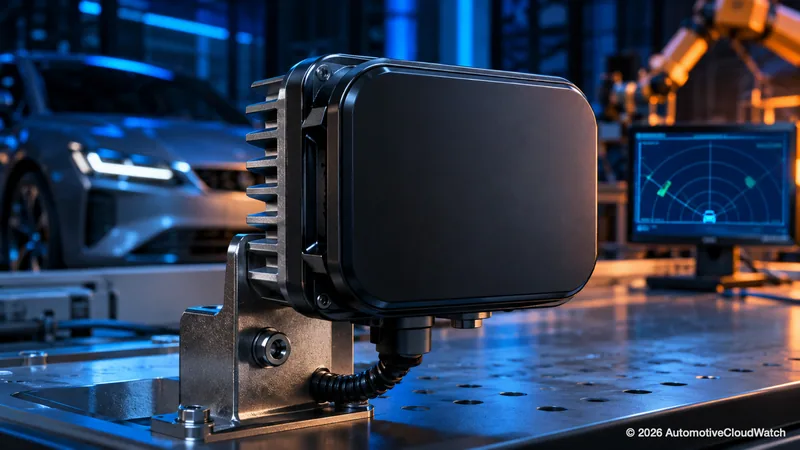 Radar Sensor that uses radio echoes to measure the distance, speed and direction of objects, and keeps working in rain, fog and darkness.
- Real-Time Kinematic RTK Technique that sharpens satellite positioning to centimeters using corrections from reference stations at known locations.
- Rear Cross-Traffic Alert RCTA Warning of cars, cyclists or pedestrians approaching from the side while the car reverses out of a parking space.
- Remote Assistance Guidance from a remote operator who helps a stuck self-driving vehicle decide what to do, without driving it.
- Resimulation Replaying recorded drives through a new software version to compare its behavior against earlier versions or known answers.
- Responsibility-Sensitive Safety RSS Mobileye's 2017 mathematical rules defining safe distances and reactions so an automated car never causes a crash itself.
- RoAD to the L4 Japanese government project run by METI and MLIT since 2021 to promote Level 4 mobility services, from rural shuttles to highway trucks.
- Robotaxi Driverless taxi that customers hail through an app and that drives itself within a defined service area.
- SAE J3016 Standard defining the six levels of driving automation, Level 0 to Level 5, and the vocabulary used to discuss them.
- Safety Driver Trained person in a test vehicle's driver seat, ready to take control if the automated system makes a mistake.
- Safety Performance Indicator SPI Measure used after deployment to check automated vehicles are as safe as claimed, such as hard braking or near misses per distance.
- Safety Support Car Japanese government program certifying cars with key crash prevention features such as AEB and pedal error control, aimed at older drivers.
- Semantic Segmentation Vision task that labels every pixel or lidar point with what it shows, such as road, lane marking, car or pedestrian.
- Sensor Cleaning Washer jets, air blasts, heaters and coatings that keep cameras, lidars and radars clear of dirt, water, ice and insects.
- Sensor Fusion Combining data from cameras, radar, lidar and ultrasonics into a picture more accurate and reliable than any one sensor gives.
- Shadow Mode Running new driving software silently in cars to compare its background decisions with what the human driver actually did.
- Simulation-Based Testing Testing driving software in a virtual world where millions of scenarios, including dangerous ones, run safely and quickly.
- Simultaneous Localization and Mapping SLAM Technique in which a vehicle builds a map of an unknown place while simultaneously locating itself within it.
- Solid-State Lidar Lidar without large spinning parts that steers its beam electronically or with tiny mirrors, small enough to build into the body.
- Specified Automated Operation Japan's permit system since April 2023 that lets Level 4 driverless vehicles operate on public roads.
- Stages of Safety Euro NCAP's 2026 rating structure that scores cars in four stages, safe driving, crash avoidance, crash protection and post-crash safety.
- Standard Definition Map SD map Ordinary navigation map showing roads, junctions and limits but not the position of each lane.
- Stereo Camera Pair of side-by-side cameras that measures distance by comparing their two views, as human eyes do.
- Surround View Monitor SVM Parking aid that stitches images from four or more wide-angle cameras into one top-down view on the center screen.
- Synthetic Data Artificially generated sensor data with automatically known labels, used to train and test on rare or dangerous situations.
- Takeover Request TOR Alert from a Level 3 system telling the driver to take back control, escalating from visual to sound and vibration warnings.
- Teleoperation Driving a vehicle remotely in real time over a wireless link while watching live video from its cameras.
- Thermal Camera Camera that sees heat rather than visible light, spotting people and animals in total darkness without headlight glare.
- Time to Collision TTC Seconds left before two road users would collide if both kept their current speed and direction.
- Time-of-Flight Lidar ToF lidar Most common lidar type, which measures distance by timing how long a laser pulse takes to bounce back.
- Traffic Jam Assist TJA Level 2 feature for slow traffic that keeps the car in lane and follows the car ahead with automatic stop and start.
- Traffic Jam Pilot Level 3 feature that drives in slow highway traffic and lets the driver look away until asked to take over.
- Traffic Sign Recognition TSR Camera system that reads road signs, especially speed limits, and shows them to the driver or feeds them to cruise control.
- Ultrasonic Sensor USS Bumper sensor that sends out inaudible sound and listens for echoes to detect obstacles up to about 5 meters away.
- User-in-Charge UK legal role for the person in the driving seat of a self-driving vehicle, who is not responsible for the driving itself.
- Vehicle Motion Control Driving software layer that turns the planned path and speed into steering, acceleration and braking commands.
- Vision-Language Model VLM AI model that understands both images and text, so it can describe a driving scene or reason about unusual situations.
- Vision-Language-Action Model VLA AI model combining vision, language and action so a driving system can reason about a scene in words before choosing how to drive.
- Vision-Only Driving Automated driving approach that uses only cameras, without radar or lidar, keeping hardware simple and cheap.
- World Model AI model that learns how driving scenes evolve so it can imagine future events and generate realistic future camera views.
Full entry for members
Every term has a full entry for members: the plain-words definition, the practitioner note and the typed links between terms.
ACW Automotive Glossary, edition 2026.11.1. The headword and one line are open to everyone.