Glossary · Automotive
Diagnostics and Service
65 terms in the Automotive glossary, each with its one-line definition.
65 terms, A to Z
- A2L File A2L Description file that tells calibration tools where each variable and parameter sits in ECU memory and how to convert it to engineering units.
- ADAS Sensor Calibration Re-aiming driver assistance cameras, radars and lidars after repairs or alignment so the software sees the road exactly where it expects.
- Authentication Service UDS diagnostic service 0x29 that checks a tester's digital certificate before allowing sensitive actions such as reprogramming.
- Calibration Tuning the parameters inside ECU software, such as fuel maps and shift points, so a specific vehicle drives and meets targets as intended.
- CAN Calibration Protocol CCP Older CAN-only protocol for reading live ECU values and changing tuning parameters during calibration, now superseded by XCP.
- Data Identifier DID Two-byte number that names one data item in an ECU, such as the VIN or software version, so diagnostic tools can read or write it.
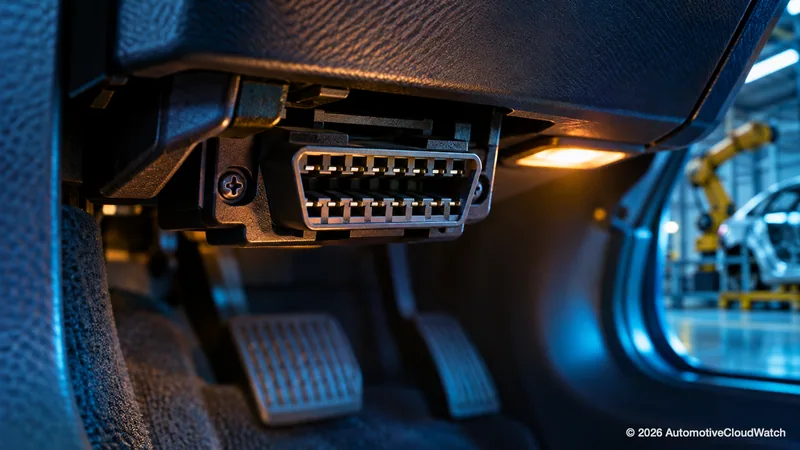 Data Link Connector DLC Standard 16-pin socket under the dashboard where diagnostic tools plug in to reach fault codes and vehicle networks.
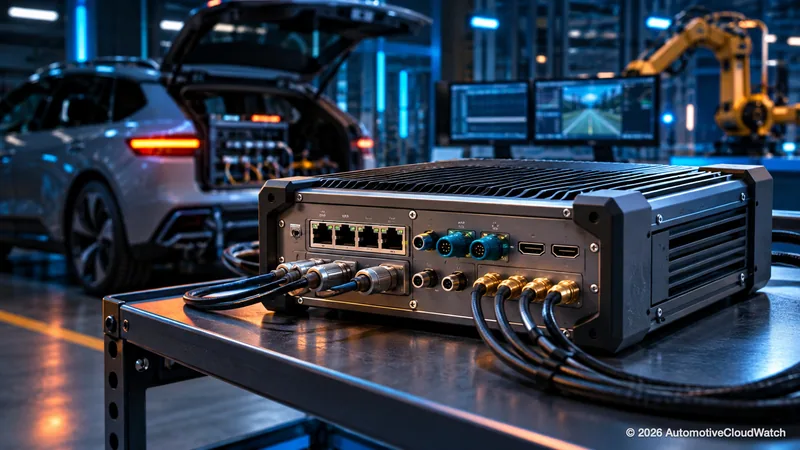 Data Logger Recording unit in test vehicles that captures network traffic, signals, video and sensor streams for later engineering analysis.
- Diagnostic Communication Manager DCM AUTOSAR software module that receives diagnostic tool requests in an ECU, checks they are allowed and sends the replies.
- Diagnostic Event Manager DEM AUTOSAR software module that decides when a detected fault becomes a stored trouble code and manages the ECU's fault memory.
- Diagnostic Session ECU mode that decides which diagnostic actions it accepts, from basic reading in default mode to writing and reprogramming in special modes.
- Diagnostic Tester External tool, from dealer workshop systems to engineering software, that talks to vehicle ECUs over diagnostic protocols.
- Diagnostic Trouble Code DTC Code an ECU stores when it detects a fault, such as P0301 for a cylinder 1 misfire, read by technicians to start a repair.
- Diagnostics over Internet Protocol DoIP Standard for sending diagnostic commands over Ethernet, making software reprogramming far faster than over CAN.
- DoIP Entity Any vehicle unit reachable by Ethernet diagnostics, including the edge node gateway that external testers connect to.
- DTC Status Byte Eight flags attached to each trouble code showing whether the fault is active, pending, confirmed or lit a warning lamp.
- European On-Board Diagnostics EOBD Europe's version of OBD-II emissions self-diagnosis, required on gasoline cars from 2001 and diesels from 2004.
- Extended Data Record Extra fault code context stored by an ECU, such as occurrence and aging counters, to tell intermittent faults from persistent ones.
- Extended Vehicle ExVe Model in which third parties reach vehicle data through the automaker's servers rather than directly through ports on the car.
- Fault Debouncing Filter that makes an ECU wait until a fault repeats or persists before storing a trouble code, so brief glitches are ignored.
- Fault Memory Nonvolatile area inside an ECU where trouble codes and their surrounding conditions are stored until a technician clears them.
- Flash Container Software package loaded into an ECU during reprogramming, holding the binary, target addresses, checksums and signatures.
- Flashing Reprogramming an ECU by replacing the software in its flash memory, on the line, at the dealer or over the air.
- Freeze Frame Snapshot of operating conditions, such as engine speed and coolant temperature, that an ECU saves when it stores a trouble code.
- Functional Addressing Way for a diagnostic tool to send one request that all relevant ECUs receive at once, like a broadcast.
- Guided Fault Finding Workshop software that walks a technician step by step through tests until the faulty part is found.
- ISO-TP Transport protocol that splits diagnostic messages too long for one CAN frame into a sequence of frames with flow control.
- Japan On-Board Diagnostics JOBD Japan's OBD requirements, now also used in periodic inspections that read safety-related fault codes through the diagnostic port.
- K-Line Single-wire serial diagnostic link used before CAN diagnostics, still found on older cars and some motorcycles.
- Keyword Protocol 2000 KWP2000 Older diagnostic protocol over K-Line and later CAN that preceded UDS and still appears on legacy ECUs.
- Malfunction Indicator Lamp MIL Engine-shaped dashboard warning light that the OBD system turns on when it detects an emissions-related fault.
- Measurement Data Format MDF Standard binary file format for recorded vehicle network traffic, ECU signals and calibration variables, readable by most tools.
- Modular Vehicle Communication Interface MVCI ISO 22900 standards defining how PC diagnostic software talks to vehicle interface adapters from any vendor.
- Negative Response Code NRC One-byte code an ECU returns when it refuses a diagnostic request, explaining why, such as security access denied.
- OBD on UDS OBDonUDS Newer legislated emissions diagnostics standard that moves OBD communication onto the UDS protocol used for manufacturer diagnostics.
- On-Board Diagnostics OBD A car's built-in ability to monitor itself, detect faults, store trouble codes and warn the driver, first required for emissions parts.
- On-Board Diagnostics II OBD-II Standardized US emissions diagnostics required on new light vehicles since model year 1996, readable by any generic scan tool.
- Open Diagnostic Data Exchange ODX Standard XML format describing an ECU's diagnostic services, data identifiers and fault codes so testers configure automatically.
- Open Test Sequence Exchange OTX Standard XML format for diagnostic test sequences and workshop procedures that run on any compliant tester.
- Operation Cycle Defined period, such as one ignition on and off, over which an ECU runs diagnostics and updates its fault code status.
- Parameter ID PID Code a generic scan tool uses to request one live emissions-related value, such as engine speed, from any OBD-II car.
- Physical Addressing Sending a diagnostic request to one specific ECU by its own address rather than broadcasting it to all ECUs.
- Predictive Maintenance Using vehicle data and analytics to forecast that a part will fail so it can be serviced before it breaks down.
- Read DTC Information UDS service 0x19 a scan tool uses to read stored fault codes with their status, snapshots and occurrence details.
- Readiness Monitor OBD flag showing whether each emissions self-test has completed since codes were last cleared, checked at inspection stations.
- Remote Diagnostics Reading a vehicle's fault codes and data over its cellular connection instead of plugging in at a workshop.
- Request Download and Transfer Data Group of UDS services that send new software into an ECU block by block during reprogramming.
- Response Pending UDS reply in which an ECU says it received a request and is still working, so the tester waits instead of timing out.
- Right to Repair Laws and agreements requiring automakers to give independent shops and owners fair access to diagnostic data, tools and repair information.
- Routine Control Diagnostic command that starts, stops or reports a built-in ECU procedure such as erasing flash or running a self-test.
- SAE J1939 J1939 SAE standards family for CAN communication and diagnostics in trucks, buses and agricultural and construction machines.
- SAE J2534 J2534 SAE standard for pass-thru adapters that let independent shops reprogram ECUs with automaker software through any compliant device.
- SAE J3138 SAE recommended practice for protecting vehicles against attacks through the OBD port while still allowing legitimate repair.
- Scan Tool Handheld or PC-based device that mechanics plug into the diagnostic port to read fault codes, live data and freeze frames.
- Secure Gateway SGW Gateway ECU feature that blocks diagnostic port commands unless the tool or technician is authorized by the automaker.
- Security Access UDS seed and key lock that requires a tool to compute a correct key before sensitive functions such as reprogramming unlock.
- Security-Related Repair and Maintenance Information Access SERMI EU scheme letting accredited independent repairers access security-related functions such as key programming.
- Service Identifier SID First byte of a diagnostic request naming the action wanted, echoed with 0x40 added in a positive reply.
- Service-Oriented Vehicle Diagnostics SOVD Diagnostic standard using web-style HTTP and JSON interfaces, designed for software-defined vehicles and remote access.
- Tester Present Small periodic diagnostic message that tells an ECU the tool is still connected so its special session does not time out.
- Unified Diagnostic Services UDS Main diagnostic protocol of modern cars, used to read fault codes, read and write data, run tests and reprogram ECUs.
- Universal Measurement and Calibration Protocol XCP Protocol that lets calibration tools read and change ECU memory values in real time over CAN, Ethernet and other buses.
- Variant Coding Configuring an installed ECU to match a vehicle's equipment and market so one part number serves many versions.
- Vehicle Communication Interface VCI Hardware adapter connecting a diagnostic computer to the car's OBD port and translating to CAN, DoIP or K-Line.
- World-Wide Harmonized On-Board Diagnostics WWH-OBD UN global technical regulation harmonizing OBD requirements on UDS, used mainly for heavy-duty vehicles in Europe.
Full entry for members
Every term has a full entry for members: the plain-words definition, the practitioner note and the typed links between terms.
ACW Automotive Glossary, edition 2026.11.1. The headword and one line are open to everyone.