Glossary · Automotive
Safety, Regulation and Homologation
146 terms in the Automotive glossary, each with its one-line definition.
146 terms, A to Z
- 1958 Agreement United Nations treaty under which member countries adopt common UN Regulations and mutually recognize vehicle approvals granted under them.
- Acoustic Vehicle Alerting System AVAS Sound generator on electric and hybrid cars that warns pedestrians of an approaching vehicle at low speeds, when the car is otherwise nearly silent.
- Active Hood Pedestrian safety system that raises the rear of the hood after a pedestrian impact to give the head more room to decelerate above hard engine parts.
- Active Safety Vehicle features that help prevent a crash or reduce its severity, such as anti-lock brakes, stability control and automatic emergency braking.
- Adaptive Driving Beam ADB Headlights that keep the high beam on while automatically darkening only the parts that would dazzle other road users.
- Advanced Clean Cars II ACC II California rule requiring a rising share of zero-emission new car sales up to 100 percent by 2035, now contested after Congress revoked its federal waiver.
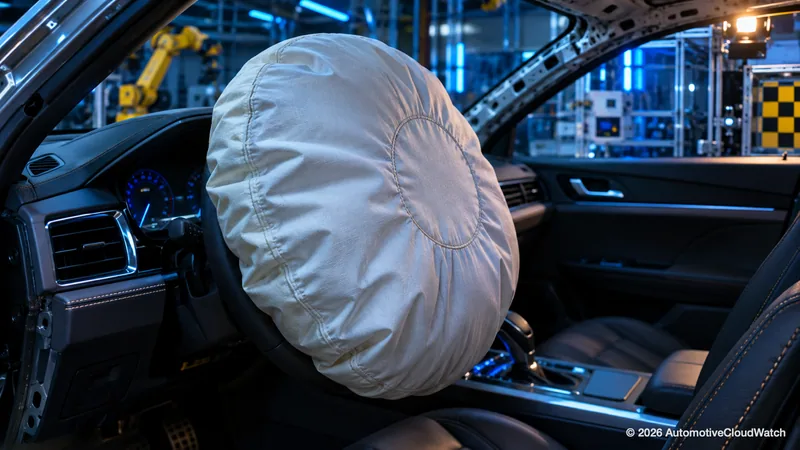 Airbag Fabric cushion that inflates within milliseconds of a crash to soften the impact between an occupant and the car interior.
- Anthropomorphic Test Device ATD Formal name for a crash test dummy, an instrumented human model that measures the forces a person would experience in a crash.
- Australasian New Car Assessment Program ANCAP Independent crash test and five-star safety rating program for new cars sold in Australia and New Zealand, aligned with Euro NCAP.
- Automobile Recycling Law Japanese law requiring automakers and importers to recycle shredder residue, airbags and refrigerants from scrapped cars, funded by a prepaid fee.
- Automotive Research Association of India ARAI Pune-based research and testing institute that is one of India's main agencies for type approval and vehicle standards development.
- Battery Passport Digital record per battery, reached via QR code, showing origin, chemistry, carbon footprint, recycled content and health, required in the EU from 2027.
- Bharat NCAP BNCAP India's government-run crash test and star rating program for passenger cars, launched in 2023 and aligned with Global NCAP.
- Bharat Stage VI BS6 India's vehicle exhaust emission standard, broadly equivalent to Euro 6, mandatory since 2020 after skipping the BS5 stage.
- California Air Resources Board CARB California air quality regulator that has set stricter vehicle emissions and zero-emission vehicle rules under a federal Clean Air Act waiver.
- Camera Monitor System CMS Cameras and interior displays that replace conventional side mirrors, cutting drag and improving visibility at night or in rain.
- Central Motor Vehicle Rules CMVR India's main vehicle regulations on safety, emissions and construction, against which every vehicle sold there must be type approved.
- Certificate of Conformity CoC Document the manufacturer issues for each vehicle declaring that it matches an officially approved type, used for registration.
- Child Restraint System CRS Child car seat or booster designed to protect a child in a crash, required by law for young children in most countries.
- China 6 China's national emission standard for light vehicles, introduced as 6a and then 6b with on-road testing, broadly comparable to Euro 6.
- China Automotive Technology and Research Center CATARC State-owned Tianjin body that writes many Chinese vehicle standards, tests vehicles for certification and runs C-NCAP.
- China Compulsory Certificate CCC China's mandatory product certification mark required on vehicles and many safety parts before import, sale or use.
- China Insurance Automotive Safety Index C-IASI Insurance-backed Chinese crash rating program modeled partly on IIHS, using Good to Poor ratings including a small overlap test.
- China New Car Assessment Program C-NCAP China's main crash test and star rating program for new cars, run by CATARC and broadly following Euro NCAP.
- Conformity of Production CoP Requirement that vehicles built on the line keep matching the approved type, checked through factory audits and sample testing.
- Connected Vehicle Rule US rule banning connected vehicles with certain Chinese or Russian connectivity or automated driving software and hardware.
- Corporate Average Fuel Economy CAFE US rules requiring each automaker's sales-weighted fleet to meet footprint-based average fuel economy targets.
- Crash Test Deliberate, controlled collision of a vehicle with instrumented dummies to measure how well it protects occupants.
- Defeat Device Illegal hardware or software that makes emissions controls work worse in real driving than during official testing.
- Defect Information Report Filing an automaker must submit to NHTSA after finding a safety defect or noncompliance, formally starting a US recall.
- Driver Drowsiness and Attention Warning DDAW System that detects driver fatigue from steering behavior or a camera and warns the driver to take a break, mandatory in the EU.
- Dual Credit Policy Chinese rule linking corporate fuel consumption credits with new energy vehicle credits that automakers must earn or buy.
- Emissions Pooling EU arrangement letting several automakers combine fleets to meet one joint CO2 target, often with payments to EV-heavy makers.
- End-of-Life Vehicles Directive ELV EU law requiring most of a scrapped car's weight to be reused or recycled and restricting hazardous substances in new vehicles.
- Environmental Protection Agency EPA US federal agency that sets vehicle pollutant limits, certifies new vehicles and runs the fuel economy and range tests.
- EPA Tier 3 US EPA vehicle emission and gasoline sulfur standards phased in over model years 2017 to 2025, aligned with California's LEV III.
- EU 2035 Combustion Engine Phase-Out EU rule that new cars and vans sold from 2035 must have zero tailpipe CO2, effectively ending new gasoline and diesel sales.
- EU Battery Regulation EU law covering the whole battery life cycle, requiring carbon footprint, due diligence, recycled content and a battery passport.
- EU CO2 Fleet Targets Limits on the average CO2 emissions of each automaker's new cars and vans sold in the EU, with fines for exceeding them.
- EU Tire Label Mandatory EU tire label rating fuel efficiency, wet grip and external noise in classes A to E.
- Euro 6 European exhaust emission standard for new cars and light vans that applied from 2015 and is being replaced by Euro 7.
- Euro 7 Newest EU emissions regulation that adds brake and tire particle limits and battery durability rules alongside exhaust limits.
- Euro NCAP Europe's independent new car safety rating program that crash tests vehicles and awards up to five stars.
- Evaporative Emissions EVAP Fuel vapors escaping from the tank and fuel system, captured in a charcoal canister and later burned in the engine.
- Event Data Recorder EDR Function in the airbag control unit that saves a few seconds of vehicle data around a crash for investigators.
- Extended Producer Responsibility EPR Policy principle making manufacturers responsible for collecting and recycling their products at end of life.
- Far-Side Airbag Airbag that inflates between the front seats in a side crash to keep occupants from striking each other or the console.
- Faster Adoption and Manufacturing of Electric Vehicles FAME Former Indian purchase subsidy program for EVs, mainly two- and three-wheelers and buses, succeeded by PM E-DRIVE in 2024.
- Federal Motor Vehicle Safety Standard 126 FMVSS 126 US safety standard requiring electronic stability control on light vehicles, verified by the sine with dwell steering test.
- Federal Motor Vehicle Safety Standard 127 FMVSS 127 US safety standard requiring automatic emergency braking with pedestrian detection, including at night, on new light vehicles.
- Federal Motor Vehicle Safety Standard 208 FMVSS 208 US standard for occupant protection in frontal crashes that made frontal airbags standard and later required advanced adaptive airbags.
- Federal Motor Vehicle Safety Standards FMVSS US government safety rules every new vehicle must meet, self-certified by the manufacturer and enforced by NHTSA.
- Federal Test Procedure FTP-75 Official US laboratory driving cycle simulating city stop-and-go driving with a cold start, used for emissions and city fuel economy.
- FMVSS Exemption Temporary NHTSA permission to sell a limited number of vehicles that do not meet certain federal safety standards, used for novel designs.
- Garage Certificate Japanese police-issued proof that a car owner has an off-street parking space near home, required to register most cars.
- Gas Guzzler Tax US federal excise tax on new passenger cars whose fuel economy falls below 22.5 miles per gallon, with light trucks exempt.
- GB 38031 China's mandatory EV traction battery safety standard whose 2025 edition requires no fire or explosion after cell thermal runaway.
- GB 48001 China's mandatory 2026 door handle standard requiring mechanical release of every door from inside and outside, effectively banning fully electric handles.
- GB Standards GB China's national technical standards, mandatory as GB and recommended as GB/T, that vehicles sold in China must meet.
- General Safety Regulation GSR EU law making features such as automatic emergency braking, speed assistance, drowsiness warning and event data recorders compulsory on new vehicles.
- Global NCAP UK-based charity that supports car safety rating programs worldwide and crash tests popular models in emerging markets.
- Global Technical Regulation GTR Common vehicle requirement agreed through the UN 1998 Agreement that countries write into national law, without mutual recognition of approvals.
- Greenhouse Gas Emissions Standards GHG Rules limiting average CO2 and other climate gases from a manufacturer's new vehicles, with credits for beating targets and penalties for missing them.
- Head Injury Criterion HIC Number estimating the risk of serious head injury from how sharply a dummy head or headform decelerates in an impact.
- Homologation Process of proving a vehicle or part meets all technical rules of a country or region so it can legally be sold there.
- Hybrid III Long-standing family of crash test dummies used as the standard in frontal crash testing, in adult male, small female and child sizes.
- i-Size European child seat standard under UN R129 that sizes seats by child height, requires ISOFIX and adds side impact testing.
- IIHS Top Safety Pick TSP Annual IIHS award for vehicles that score well in its crash, headlight and crash prevention tests, with a higher Top Safety Pick+ tier.
- In-Service Conformity ISC EU emissions testing of vehicles already in customer use to check they still meet limits years after sale.
- Insurance Institute for Highway Safety IIHS US insurer-funded research group that runs its own often tougher crash tests and rates vehicles, including Top Safety Pick awards.
- Intelligent Speed Assistance ISA System that detects the speed limit from signs and maps and warns the driver or limits speed, mandatory on new EU cars.
- ISO 6469 International standard series on electrical safety of electric road vehicles, covering shock protection, battery safety and post-crash safety.
- ISOFIX International standard for anchor bars built into vehicle seats so child seats can lock directly onto the car structure.
- Japan New Car Assessment Program JNCAP Japan's official consumer safety rating program combining crash, preventive safety and emergency call assessments into one rating.
- Japanese Recall System Japan's three-level system of recalls, improvement measures and service campaigns supervised by MLIT.
- JC08 Japan's former laboratory fuel economy and emissions test cycle, replaced by the WLTC version of WLTP from 2018.
- Kraftfahrt-Bundesamt KBA Germany's federal motor transport authority that approves vehicle types, oversees recalls and publishes registration statistics.
- Latin NCAP Car safety rating program for Latin America and the Caribbean that crash tests regional models and publishes star ratings.
- Lemon Law Mainly US state consumer law requiring makers to replace or buy back a new vehicle with a serious defect they cannot fix.
- Load Limiter Seatbelt mechanism that lets the belt yield in a controlled way above a set force to reduce chest injuries.
- Low Emission Zone LEZ City area where older or more polluting vehicles are banned or charged to enter, usually based on their Euro standard.
- MIIT Vehicle Announcement China's official catalog of approved vehicle makers and models, which a car must enter before it can be built or sold.
- Ministry of Industry and Information Technology MIIT Chinese ministry regulating the auto industry, controlling the vehicle product catalog and rules on credits, ADAS and OTA updates.
- Ministry of Land, Infrastructure, Transport and Tourism MLIT Japanese ministry that approves vehicle types, oversees recalls and runs the shaken periodic inspection system.
- Ministry of Road Transport and Highways MoRTH Indian ministry that writes the Central Motor Vehicle Rules, sets safety and emission mandates and runs Bharat NCAP.
- Mobile Progressive Deformable Barrier MPDB Euro NCAP frontal crash test in which the car and a moving barrier trolley collide, also scoring how aggressive the car is to others.
- Moderate Overlap Frontal Test Crash test in which 40 percent of a car's front width hits a deformable barrier, now with a rear-seat dummy in the IIHS version.
- Monroney Label Required US new car window sticker listing price, equipment, fuel economy, emissions and safety ratings.
- National Agency for Automobile and Land Transport Technology NALTEC Japanese agency that conducts type designation testing and runs national shaken inspection stations for the transport ministry.
- National Highway Traffic Safety Administration NHTSA US agency that writes and enforces federal vehicle safety standards, oversees recalls and sets CAFE fuel economy rules.
- NEV Purchase Tax Exemption Chinese policy waiving or halving the 10 percent purchase tax on electric, plug-in hybrid and fuel cell vehicles.
- New Car Assessment Program NCAP Consumer safety rating program that crash tests new cars and rates their safety features, usually in stars.
- New European Driving Cycle NEDC Former European lab test cycle for emissions and fuel consumption, replaced by WLTP because its results were unrealistically low.
- Nitrogen Oxides NOx Polluting gases formed from nitrogen and oxygen at high combustion temperatures, a major target of diesel exhaust treatment.
- Non-Exhaust Emissions Particles released from brakes, tires and road surface wear rather than the tailpipe, now regulated for the first time by Euro 7.
- Off-Cycle Credits Compliance credits for technologies that save fuel or CO2 in real driving but not in the official test, called eco-innovations in the EU.
- Office of Defects Investigation ODI NHTSA office that analyzes complaints and data on vehicles in use and opens defect investigations that often lead to recalls.
- On-Board Fuel Consumption Monitoring OBFCM EU requirement that new cars record lifetime fuel and electricity use and distance, used to compare real use with official figures.
- Particle Number PN Exhaust pollution metric counting the solid particles a vehicle emits per kilometer rather than weighing them.
- Pass-By Noise Sound a vehicle makes accelerating past a trackside microphone, the measure regulators use to limit vehicle exterior noise.
- Passive Safety Vehicle features that protect people during and after a crash, such as crumple zones, a strong passenger cell, seatbelts and airbags.
- Pedestrian Protection Front-end design features and test rules that reduce injuries to people on foot struck by a vehicle.
- Portable Emissions Measurement System PEMS Compact analyzers and flow meters mounted on a car to measure exhaust emissions during real road driving.
- Real Driving Emissions RDE EU on-road emissions test using portable equipment, introduced because lab results understated real traffic emissions.
- Regulation (EU) 2018/858 EU framework law for approving vehicles for sale and for market surveillance, letting the Commission test cars and fine makers directly.
- Regulatory Credits Tradable compliance units earned by beating emissions, fuel economy or ZEV requirements, which short makers can buy instead of paying fines.
- Roof Strength Test Test that presses a plate onto one corner of a car roof to measure the force it withstands, as a proxy for rollover protection.
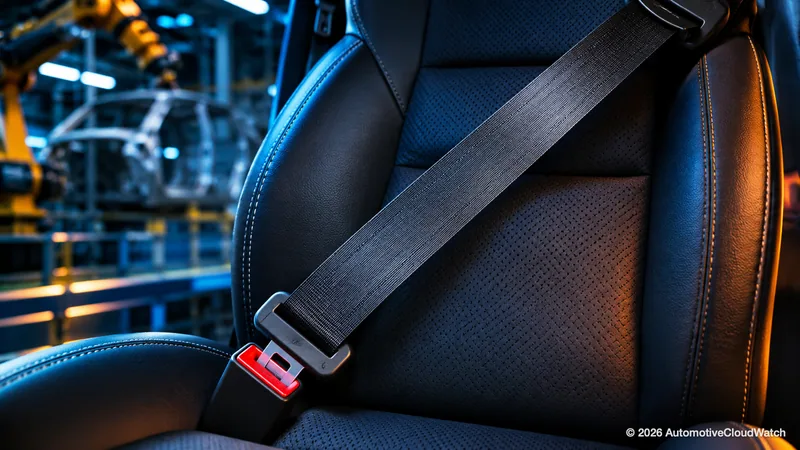 Seatbelt Strap that holds an occupant in the seat during a crash, still the most effective single safety device in a car.
- Seatbelt Pretensioner Device that tightens the seatbelt in the first instant of a crash, usually with a small pyrotechnic charge, to remove slack.
- Section 177 States US states that adopt California's vehicle emission rules instead of federal ones, as the Clean Air Act allows.
- Self-Certification US and Canadian system in which manufacturers declare compliance with safety standards themselves, with no government approval before sale.
- Shaken Japan's compulsory periodic vehicle inspection, first after three years and then every two years for passenger cars.
- Side Impact Test Crash test in which a moving barrier strikes the side of a car or the car slides sideways into a rigid pole.
- Small Overlap Frontal Test Severe IIHS crash test in which only the outer 25 percent of a car's front hits a rigid barrier, bypassing the main crash beams.
- State Administration for Market Regulation SAMR China's market regulator, which manages vehicle recalls, treats safety OTA fixes as recalls and oversees CCC certification.
- Stop-Sale Order Instruction that dealers must not sell or deliver certain vehicles until a recall fix or other repair is made.
- Super Credits CO2 rule letting each very low emission vehicle count as more than one car in a maker's fleet average.
- Technical Service Independent testing body appointed by an approval authority to run or witness the tests for vehicle type approval.
- THOR Advanced frontal crash test dummy with more sensors and more human-like spine, chest and pelvis than Hybrid III.
- Top Runner Program Japanese efficiency policy that sets future targets for cars and appliances from today's best-performing products.
- TREAD Act US law passed in 2000 after Ford Explorer tire failures that created NHTSA early warning reporting and led to mandatory TPMS.
- Type Approval System in which a government authority approves a vehicle design before sale, so every car built to it can be registered without individual tests.
- Type Designation Japan's form of type approval in which the maker's own factory final inspection replaces government inspection of each new car.
- Type-Approval Authority Government body that grants vehicle type approvals and ensures production keeps matching them, such as KBA or RDW.
- UN Regulation No. 10 UN R10 UN rule on vehicle electromagnetic compatibility covering emissions and immunity, including vehicles in charging mode.
- UN Regulation No. 100 UN R100 UN rule on electrical safety of battery electric vehicles, covering shock protection and high-voltage battery safety tests.
- UN Regulation No. 13-H UN R13-H UN rule on braking for passenger cars and light vans, covering service and parking brakes, ABS and regenerative braking.
- UN Regulation No. 135 UN R135 UN rule for pole side impact, in which a car is propelled sideways into a rigid pole at 32 km/h and 75 degrees.
- UN Regulation No. 137 UN R137 UN rule for full-width frontal crash protection against a rigid wall at 50 km/h, mainly testing restraint performance.
- UN Regulation No. 152 UN R152 UN rule for automatic emergency braking on cars and light vans, the technical basis of the EU AEB requirement.
- UN Regulation No. 155 UN R155 UN rule requiring a certified cybersecurity management system and per-type cyber risk treatment for vehicle approval.
- UN Regulation No. 157 UN R157 UN rule for automated lane keeping systems, the first binding international regulation for Level 3 driving.
- UN Regulation No. 171 UN R171 UN rule for Level 2 driver control assistance systems, setting behavior and driver monitoring requirements.
- UN Regulation No. 48 UN R48 UN rule on how lighting and light-signaling devices must be installed on a vehicle.
- UN Regulation No. 79 UN R79 UN rule on steering equipment, including power steering, automatically commanded steering functions and steer-by-wire.
- UN Regulation No. 94 UN R94 UN rule for frontal offset crash protection, with 40 percent overlap into a deformable barrier at 56 km/h.
- UN Regulation No. 95 UN R95 UN rule for side impact protection, with a moving deformable barrier striking the driver side at 50 km/h.
- UNECE World Forum for Harmonization of Vehicle Regulations WP.29 United Nations forum where governments agree common technical vehicle rules on safety, emissions, cybersecurity and automation.
- Uniform Tire Quality Grading UTQG US sidewall rating giving passenger tires a treadwear number plus traction and temperature grades.
- Uyghur Forced Labor Prevention Act UFLPA US law presuming goods made in Xinjiang or by listed firms involve forced labor and barring their import unless proven otherwise.
- Vehicle Identification Number VIN Unique 17-character code identifying every road vehicle, encoding maker, features, model year, plant and serial number.
- Vulnerable Road User VRU Road user without a vehicle body around them, such as pedestrians, cyclists and motorcyclists.
- Whiplash Protection Seat and head restraint design that limits neck injury when a car is hit from behind.
- Whole Vehicle Type Approval WVTA EU process certifying that a complete vehicle type meets every applicable EU requirement, valid across the whole EU.
- WorldSID Globally harmonized side impact crash test dummy with more human-like lateral response and more sensors than earlier side dummies.
- Zero-Emission Vehicle Mandate ZEV Rule requiring a rising share of each automaker's new sales to be battery electric or fuel cell vehicles, with credits or fines for shortfalls.
Full entry for members
Every term has a full entry for members: the plain-words definition, the practitioner note and the typed links between terms.
ACW Automotive Glossary, edition 2026.11.1. The headword and one line are open to everyone.