Glossary · Manufacturing
OT Cybersecurity and Sustainability
133 terms in the Manufacturing glossary, each with its one-line definition.
133 terms, A to Z
- Active Cyber Defense Act Japanese laws from 2025 letting the government monitor traffic and disrupt attacker servers, and requiring infrastructure operators to report incidents.
- Air Gap Physically isolating a computer network from all other networks, an idea rarely achieved in modern plants because of remote access and USB drives.
- Application Allowlisting A security control that lets only approved programs run on a computer, well suited to HMIs and SCADA servers whose software rarely changes.
- Asset Owner In IEC 62443, the organization that owns and operates an industrial control system and is accountable for its security, usually the plant operator.
- Automotive and Battery Traceability Center ABtC A Japanese association running a platform where automakers and battery suppliers share battery carbon footprint and due diligence data under their own control.
- Avoided Emissions Emission cuts outside a company's value chain that occur because its product replaces a higher-emitting alternative, reported apart from its inventory.
- Battery Passport A digital record, read by QR code, describing a battery's materials, origin, carbon footprint and health, required in the EU from February 2027.
- Carbon Border Adjustment Mechanism CBAM An EU charge on imports of carbon-intensive goods such as steel, aluminum and cement so foreign producers face a carbon cost like EU producers.
- Carbon Credit A tradable certificate for one metric ton of CO2 equivalent reduced or removed by a project outside the buyer's value chain, used to compensate emissions.
- Carbon Dioxide Equivalent CO2e A common unit that expresses the warming effect of any greenhouse gas as the amount of carbon dioxide that would cause the same warming.
- CDP A nonprofit that runs the main global system for companies to disclose climate, water and forest data to investors and customers, scored A to D.
- China Certified Emission Reduction CCER China's government-backed voluntary carbon credit program, relaunched in 2024, whose credits can offset a limited share of national carbon market obligations.
- China National Carbon Market China's national emissions trading system, launched in 2021 for power plants and expanded in 2025 to steel, cement and aluminum smelting.
- Circular Economy An economic model that keeps products and materials in use through reuse, repair, remanufacturing and recycling instead of take, make and throw away.
- Common Vulnerabilities and Exposures CVE The public catalog that gives each known software or hardware security weakness a unique ID so vendors, tools and plant teams can refer to it exactly.
- Common Vulnerability Scoring System CVSS An open method that rates the severity of a vulnerability from 0 to 10, though a high score does not always mean high risk for a given plant.
- Compensating Countermeasure A security measure used instead of, or alongside, a requirement a device cannot meet itself, such as a firewall protecting a PLC without passwords.
- Corporate Sustainability Due Diligence Directive CSDDD An EU law requiring large companies to find, prevent and fix human rights and environmental harms in their operations and business partner chains.
- Corporate Sustainability Reporting Directive CSRD The EU law requiring large companies to publish detailed, externally assured sustainability information, including emissions, in their annual reports.
- Cradle-to-Gate An impact boundary covering everything from raw material extraction until the finished product leaves the factory gate, excluding use and disposal.
- Critical Information Infrastructure CII In Chinese law, networks and systems in key sectors whose disruption would harm national security, subject to stricter security and data localization rules.
- Cyber Resilience Act CRA An EU law setting mandatory cybersecurity, vulnerability handling and security update duties for products with digital elements, including industrial parts.
- Cyber-Informed Engineering CIE An approach that builds cybersecurity into plant engineering by asking what physical harm a compromise could cause and designing it out, even mechanically.
- Cybersecurity Management Guidelines METI and IPA guidance telling Japanese executives what they must do to manage cybersecurity as a business risk, built around ten key instructions.
- Cybersecurity Management System CSMS An organization's overall program of policies, roles, risk assessment and controls for cybersecurity, used for plant security and vehicle approval alike.
- Cybersecurity Maturity Model Certification CMMC A US Department of Defense program requiring defense contractors and their suppliers to prove they protect sensitive government information to a set level.
- Data Security Law DSL A Chinese law in force since 2021 governing how data is collected, stored and transferred, with stricter rules for important and core data.
- Deep Packet Inspection DPI Examining the contents of network messages, not just addresses and ports, so tools can see and block dangerous commands such as a write to a PLC.
- Defense in Depth A security strategy of stacking several independent protections so that if one layer fails the others still stop an attack.
- Digital Product Passport DPP A scannable digital record of a product's origin, materials, carbon footprint, repairability and end-of-life handling, mandated product by product in the EU.
- Double Materiality The CSRD principle that sustainability is reported both for how it affects company finances and for how the company affects people and the environment.
- Dual Carbon Goals China's 2020 pledge to peak carbon dioxide emissions before 2030 and reach carbon neutrality before 2060, driving its industrial climate policy.
- Ecodesign for Sustainable Products Regulation ESPR An EU law that sets product-group rules on durability, repairability, recyclability and information, and introduces the digital product passport.
- Emission Factor A number that converts an activity such as kilowatt hours used or kilograms of steel bought into the greenhouse gas emissions it causes.
- EN 18031 European harmonized standards for the cybersecurity of wireless devices, mandatory under the Radio Equipment Directive since August 2025.
- End-of-Life Vehicles Regulation ELV EU rules on designing vehicles for recycling, using recycled materials and treating scrapped cars, replacing the older End-of-Life Vehicles Directive in 2026.
- Endpoint Detection and Response EDR Security software on servers and workstations that records activity and detects, investigates and contains threats such as ransomware.
- Energy Management System EnMS A structured, repeating cycle of setting energy targets, measuring use and acting on results, standardized in ISO 50001.
- Energy Monitoring Metering the electricity, gas, compressed air, steam and water used by a plant, line or machine to find waste and supply carbon reporting data.
- Energy Performance Indicator EnPI A measure of how efficiently a site uses energy, such as kilowatt hours per vehicle, tracked against a baseline under ISO 50001.
- Environmental Product Declaration EPD A third-party verified document reporting a product's environmental impacts in a standard format so products can be compared fairly.
- EU Emissions Trading System EU ETS The EU cap-and-trade scheme, launched in 2005, in which power plants and heavy industry surrender one allowance for each metric ton of CO2 they emit.
- EU Taxonomy An EU classification system with technical criteria defining which business activities count as environmentally sustainable, to curb greenwashing.
- European Sustainability Reporting Standards ESRS The detailed rulebooks setting out exactly what companies must disclose under the CSRD, from climate and pollution to workforce and governance.
- Foundational Requirements FR The seven top-level groups in IEC 62443, from identification and authentication to resource availability, under which all detailed requirements sit.
- FrostyGoop Malware disclosed in 2024 that sends Modbus TCP commands to controllers, used to cut heating to about 600 buildings in Lviv, Ukraine.
- Functional Unit The defined amount of product function, such as one kilogram of steel, that a life cycle assessment or footprint is calculated for.
- Global Warming Potential GWP A number saying how much a gas warms the planet relative to the same mass of carbon dioxide, usually over 100 years, with CO2 set at 1.
- Green Factory A Chinese national title awarded by MIIT to factories meeting standards on clean production, recycling and low carbon energy, held by thousands of sites.
- Green Transformation GX Japan's national policy to decarbonize the economy while strengthening industry, shaping subsidies, carbon pricing and investment for manufacturers.
- Greenhouse Gas Protocol GHG Protocol The most widely used rules for measuring and reporting greenhouse gas emissions, which sort them into Scope 1, 2 and 3.
- Guidelines for Cyber/Physical Security Measures for Factory Systems METI's 2022 guidance helping Japanese manufacturers secure factory systems step by step, from business goals through zoning to technical measures.
- GX League A METI forum launched in 2023 where Japanese companies set decarbonization targets, report progress and trade emissions, the precursor of GX-ETS.
- GX-ETS Japan's emissions trading system, mandatory from April 2026 for companies emitting at least 100,000 metric tons of CO2 a year on average.
- IEC 62443 The main international standard series for protecting industrial automation and control systems, defining duties for owners, integrators and product makers.
- IEC 62443-2-4 The IEC 62443 part setting security requirements for integrators and maintenance providers who build and service industrial control systems.
- IEC 62443-3-2 The IEC 62443 part explaining how to assess cyber risk for a control system and divide it into zones and conduits with target security levels.
- IEC 62443-3-3 The IEC 62443 part listing the security capabilities a control system must have, such as authentication and logging, graded by security level.
- IEC 62443-4-2 The IEC 62443 part setting security requirements for individual products such as PLCs, HMIs, switches and software, used for vendor certification.
- Incident Response IR The planned process for preparing for, detecting, containing and recovering from security incidents, with OT plans adding production and safety decisions.
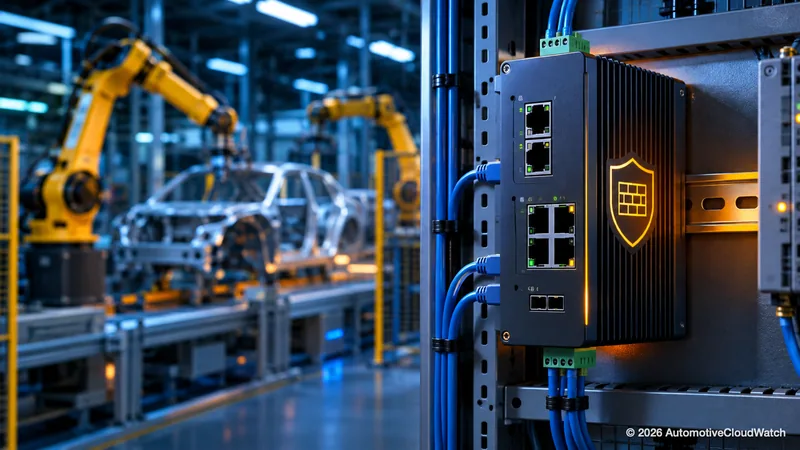 Industrial Firewall A firewall built for factory networks that controls traffic between zones and can allow or block individual industrial protocol commands.
- Industroyer Malware built to attack electric grid equipment, used in the 2016 attack that cut power to part of Kyiv by switching substation breakers.
- Information-technology Promotion Agency IPA A Japanese government agency under METI working on IT security, digital skills and infrastructure, including vulnerability information and the JC-STAR label.
- International Material Data System IMDS The automotive industry's shared database in which suppliers report the materials and substances in the parts they deliver, used since 2000.
- International Sustainability Standards Board ISSB The IFRS Foundation board, created in 2021, that writes global sustainability and climate disclosure standards for listed companies.
- Intrusion Detection System A system that watches network or computer activity for signs of attack and raises alerts without blocking anything, which suits production networks.
- ISASecure A certification program that independently checks whether industrial products and their makers' development processes meet IEC 62443.
- ISO 14001 The international standard for environmental management systems that help organizations manage impacts, meet legal duties and keep improving.
- ISO 14064 An international standard series for measuring, reporting and verifying greenhouse gas emissions at company and project level.
- ISO 14067 The international standard for calculating and reporting the carbon footprint of a single product, underpinning most supply chain footprint methods.
- ISO 14068-1 An international standard from 2023 setting how an organization or product can credibly claim carbon neutrality, putting reductions before offsets.
- J-Credit Scheme Japan's government program certifying emission reductions and removals from projects such as efficient equipment and forests as tradable credits.
- Japan Energy Conservation Act Japan's main energy efficiency law, requiring large energy users to appoint managers, report yearly and improve efficiency about 1 percent a year.
- JC-STAR Japan's star-rated security label for IoT products, launched by METI and IPA in 2025, so buyers can compare product security at a glance.
- Joint Crediting Mechanism JCM A Japanese program that deploys low-carbon technology in partner countries and shares the resulting emission reductions as credits between both nations.
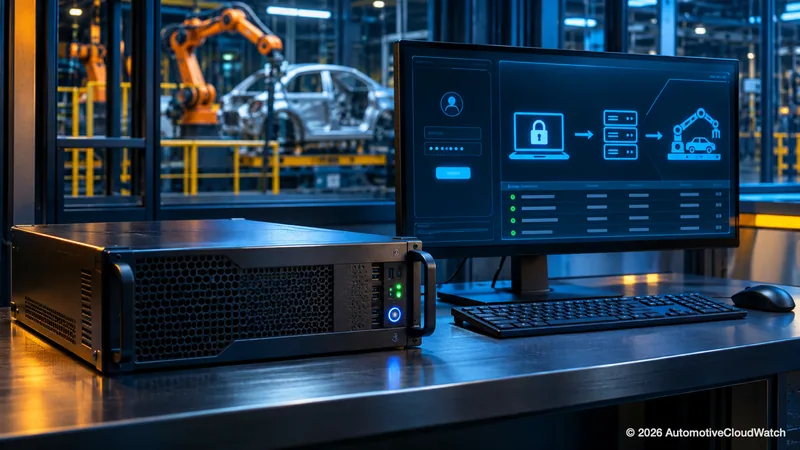 Jump Server A hardened computer, usually in the industrial DMZ, that users must log into first before reaching plant control systems, recording all access.
- Known Exploited Vulnerabilities Catalog KEV A public CISA list of vulnerabilities known to be exploited in real attacks, widely used to decide which flaws to patch first.
- Life Cycle Assessment LCA A method for adding up a product's environmental impacts across its whole life, from raw materials through production and use to disposal.
- Living off the Land LOTL An attack approach that abuses legitimate tools already on a system, such as PowerShell or engineering software, so activity looks like normal administration.
- Location-Based Method A way of calculating emissions from purchased electricity using the average emission factor of the local grid, regardless of green power contracts.
- Market-Based Method A way of calculating emissions from purchased electricity that reflects the specific power a company buys, such as renewable contracts or certificates.
- MITRE ATT&CK for ICS A free MITRE knowledge base of the tactics and techniques attackers use against industrial control systems, used to check detection coverage.
- Multi-Factor Authentication MFA A login requiring two or more different kinds of proof, such as a password plus a phone code or hardware token, so a stolen password is not enough.
- Multi-Level Protection Scheme MLPS 2.0 China's mandatory framework requiring network operators, including factories, to grade their systems by breach impact and protect and file them accordingly.
- Net Zero A state where a company cuts emissions deeply across all scopes and balances the small remainder with permanent removals from the atmosphere.
- Network Segmentation Dividing a network into separate parts with controlled connections, like fire doors, so an attack or fault in one area cannot spread freely.
- NIS2 An EU law requiring organizations in key sectors, now including vehicle and machinery makers, to manage cyber risk and report serious incidents.
- NIST Cybersecurity Framework NIST CSF A voluntary US framework of cybersecurity outcomes that helps organizations of any size organize and improve risk management for IT and OT.
- NIST SP 800-82 A free US government guide to securing operational technology in factories, utilities and buildings while respecting performance and safety needs.
- NotPetya Destructive 2017 malware disguised as ransomware that spread through a Ukrainian software update and halted Maersk, Merck and other manufacturers.
- Omnibus Simplification Package European Commission proposals from 2025 to cut and delay EU sustainability reporting and due diligence duties under the CSRD and CSDDD.
- OT Asset Inventory A complete, current list of every device on plant networks with make, model, firmware and role, the first step of most OT security programs.
- OT Network Monitoring Listening to plant network traffic with passive sensors that understand industrial protocols, to discover devices and detect abnormal behavior.
- OT Patch Management The process of assessing, testing and installing security updates on plant control systems, often only during shutdowns and with vendor approval.
- OT Security Protecting the systems that run physical processes, such as PLCs, SCADA, robots and safety systems, from cyberattack, with safety and uptime first.
- Partnership for Carbon Transparency PACT A WBCSD initiative setting common rules and data formats so companies can calculate and share product carbon footprints with partners.
- Penetration Testing An authorized simulated attack by experts to find exploitable weaknesses, done carefully in OT because active scans can crash fragile controllers.
- PIPEDREAM A flexible toolkit for attacking certain PLCs and OPC UA servers, disclosed in 2022 by US agencies and security firms before any known use.
- Post-Quantum Cryptography PQC Encryption and signature methods designed to stay secure against future quantum computers, important for industrial devices with 20 year lives.
- Power Purchase Agreement PPA A long-term contract to buy electricity, usually with its renewable certificates, from a specific generator such as a wind or solar farm.
- Primary Data Emissions or activity data measured at the specific site, process or supplier rather than taken from industry average databases.
- Privileged Access Management PAM Tools and processes that control, monitor and record use of powerful accounts, such as the engineering logins that can change PLC logic.
- Product Carbon Footprint PCF The total greenhouse gas emissions caused by a product over all or part of its life, in kilograms of CO2 equivalent.
- Product Category Rules PCR Agreed rules for running life cycle assessments and environmental declarations for one product category so results from different makers compare.
- Product Environmental Footprint PEF The European Commission's harmonized method for measuring a product's life cycle impact across 16 categories, making green claims comparable.
- Ransomware Malicious software that encrypts systems and demands payment to unlock them, a leading cause of cyber-related production stoppages.
- REACH The main EU chemicals law requiring substances made in or imported into the EU to be registered and hazardous ones restricted.
- Remanufacturing Restoring used products such as engines, transmissions or battery modules to as-new specification with a warranty, using far less energy and material.
- Renewable Energy Certificate REC A certificate for the green value of one megawatt hour of renewable electricity, bought separately from the power to support Scope 2 claims.
- RoHS An EU law restricting hazardous substances such as lead, mercury and cadmium in electrical and electronic equipment.
- Science Based Targets initiative SBTi An organization that checks whether company emission reduction targets are deep enough to be consistent with the Paris Agreement warming goal.
- Scope 1 Emissions Greenhouse gases released directly from sources a company owns or controls, such as paint oven gas burners, boilers and company vehicles.
- Scope 2 Emissions Indirect emissions from purchased electricity, steam, heat and cooling, released at the power plant rather than at the factory.
- Scope 3 Emissions All other indirect emissions in a company's value chain, upstream such as purchased steel and downstream such as driving sold vehicles.
- Secure Development Lifecycle SDL Building security into every stage of product development, from requirements and threat modeling to testing and handling vulnerabilities after release.
- Secure Remote Access SRA Controlled ways for vendors and engineers to reach plant systems from outside, brokered through the DMZ with multifactor approval and session recording.
- Security Information and Event Management SIEM A platform that gathers logs and alerts from firewalls, servers and OT monitoring tools and correlates them to spot and investigate attacks.
- Security Level SL The IEC 62443 measure of how strongly a zone or component resists attack, from SL 1 against casual misuse to SL 4 against skilled, well-funded attackers.
- Security Operations Center SOC The team that watches security alerts, investigates them and coordinates response around the clock, often with outsourced support.
- Software Bill of Materials SBOM A machine-readable list of all software components and versions inside a product, like an ingredients label, used to check exposure to new flaws.
- Stuxnet Malware found in 2010 that damaged Iranian uranium centrifuges by secretly altering Siemens PLC programs, the first widely known cyber weapon.
- Sustainability Standards Board of Japan SSBJ The Japanese body writing Japan's ISSB-aligned sustainability disclosure standards, first issued in 2025, for Prime Market listed companies.
- System Boundary The line defining which life cycle stages and processes a carbon footprint or LCA includes, a frequent reason two footprints differ.
- System Under Consideration SuC The defined boundary of the control system, its assets, networks and external links, that an IEC 62443 risk assessment covers.
- Task Force on Climate-related Financial Disclosures TCFD A Financial Stability Board task force whose 2017 recommendations set the common structure for climate disclosure, now absorbed into ISSB standards.
- TISAX The automotive industry's shared system for assessing suppliers' information security once and sharing the result with all automakers.
- TRITON Malware found in 2017 at a Saudi petrochemical plant that targeted Triconex safety systems, the first known attack aimed at disabling safety controls.
- Unidirectional Gateway A hardware device that lets data flow only one way, usually from plant to IT, with no physical return path for an attack.
- Volt Typhoon A Chinese state-sponsored hacking group, named by Microsoft and US agencies, that has quietly pre-positioned inside US critical infrastructure networks.
- Vulnerability Exploitability eXchange VEX A short machine-readable supplier statement saying whether a known vulnerability actually affects its product, sparing customers needless alerts.
- Vulnerability Management The continuous process of finding, ranking and fixing security weaknesses, where OT fixes often mean compensating controls instead of patches.
- Zero Trust A security approach that trusts no user or device just for being inside the network and verifies every user, device and request every time.
- Zones and Conduits The IEC 62443 method of grouping devices with shared security needs into zones and allowing communication between zones only through defined conduits.
Full entry for members
Every term has a full entry for members: the plain-words definition, the practitioner note and the typed links between terms.
ACW Manufacturing Glossary, edition 2026.11.1. The headword and one line are open to everyone.