AutomotiveCloudWatch
Notes

Short form, between the posts.

Notes are the working margin of AutomotiveCloudWatch: a signal worth flagging, a correction, an argument that is not yet a post. Newest first, straight from Substack.

Newest piece

Zonal Architecture [Explained]

The shift that lets software run the car is, underneath, a story about copper, fuses and who builds the boxes.

20 notes

  1. Oct 19, 2026

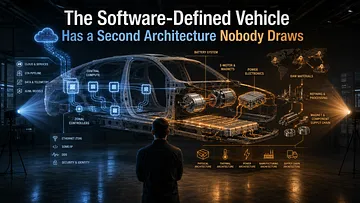
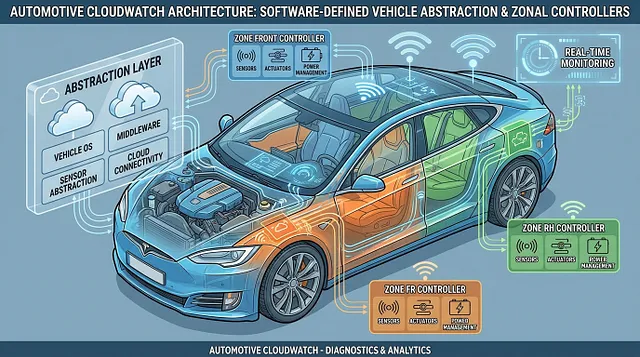
    Traditional vehicle electronics work like home appliances hardwired directly into the walls. Replacing an oven means opening drywall and rewiring the circuit. A software-defined vehicle introduces the automotive equivalent of a standard wall socket. An abstraction layer sits between physical hardware and application software. Engineers can build, validate, and update features for years without redesigning underlying control units. Toyota structured its Arene platform around this model. They designed Arene as a software development platform with dedicated tools, an SDK, and a data pipeline.…

    • Note
    0 reactionsOpen on Substack
  2. Oct 14, 2026

    An AI agent took five automotive test requirements to a Simulink model, a compiled FMU, five ecu.test runs and a green 5 of 5 report in 8 minutes and 37 seconds. The reasoning cost about 28 cents. Then I laid the requirements beside the executed tests. "At t=0" was checked at t=1s. "At all sample points" was checked once. In the published demo, the FMU that actually ran came from a hand-written C script, and the agent confirmed the match by reading equations. The team fixed that two weeks later, but the summary looked identical either way. On paper, the suite catches one of six plausible…

    • Note
    1 reactionOpen on Substack
  3. Oct 13, 2026

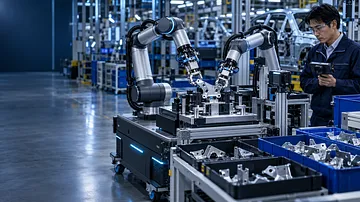
    A robot that finishes the demo can still leave your operators holding every exception that decides real throughput. That is why I think the useful factory metric is the cost of an accepted part across the full production mix, including the intervention, inspection, and rework that never show up in a monthly robot payment. RobCo's Alfie makes this timely because it targets changing parts, containers, and layouts rather than one repeated motion, but adaptability only has value where the process needs it and the economics hold once the easy cases disappear. When your plant trials physical AI,…

    • Note
    2 reactionsOpen on Substack
  4. Oct 8, 2026

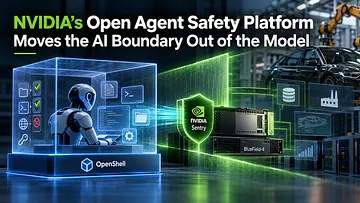
    The most important architectural idea in NVIDIA's Open Agent Safety Platform is the independent observer. Placing Sentry on a BlueField-4 DPU separates the watchdog from the host OS. An agent cannot modify the monitor judging its execution. How should enterprise architectures isolate observers from the agent runtimes they monitor?

    • Note
    1 reactionOpen on Substack
  5. Oct 8, 2026

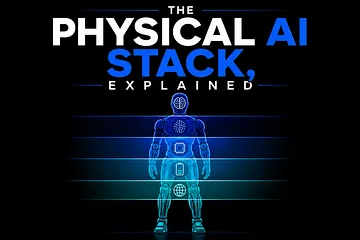
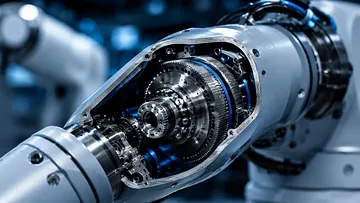
    Most Physical AI updates report one number, and it is usually about the model. A humanoid has five layers, and each fails for its own reasons. The brain picks the action. The body has to execute it under load. The parts have to repeat it thousands of times a shift, and dexterous hands alone run to roughly 31 percent of a humanoid's bill of materials. The fuel sets the working day, with most humanoids still good for two to four hours of real industrial work before a swap or a recharge. The proving ground is the customer's floor, where Figure 02 spent eleven months at BMW Spartanburg to log…

    • Note
    1 reactionOpen on Substack