Executive Briefings Curated
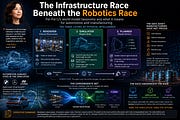
The Infrastructure Race Beneath the Robotics Race
Fei-Fei Li’s world model taxonomy and what it means for automotive and manufacturing
Engineering and vehicle or industrial platform leaders choosing architectures, operating systems, safety cases and suppliers for software-defined and autonomous systems.
Executive Briefings Curated
Fei-Fei Li’s world model taxonomy and what it means for automotive and manufacturing
Automotive Curated
Einride and Lidl just put a driverless Level 4 truck into daily grocery deliveries under the strictest road regulator in Europe. What the KBA accepted matters more than what the truck can do.
Automotive Curated
NVIDIA’s reasoning model is being read as a chatbot behind the wheel. Its own architecture and its own numbers say the expensive thinking happens before the vehicle ever ships.
Artificial Intelligence Curated
OpenShell can restrict what an agent touches. Sentry proposes a second, independent observer in the infrastructure. The harder question is who grants authority when software reaches the factory floor.
Physical AI Curated
Physical AI is built from intelligence outward. Automotive and manufacturing deploy it from physics inward, where the real bottlenecks emerge.
Physical AI Curated
Stop Counting Humanoids. Count Actuators.
Executive Briefings
The shift that lets software run the car is, underneath, a story about copper, fuses and who builds the boxes.
Executive Briefings
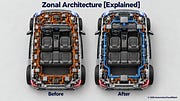
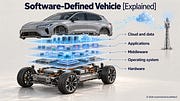
Every automaker uses the phrase. No standard defines it. The architecture behind it decides which carmakers will still control their own products in ten years.
Physical AI
RobCo Alfie makes task variability a timely physical AI question. The factory test belongs in exceptions, quality acceptance, and total operating cost.
Physical AI
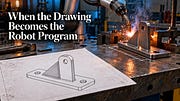
FANUC’s AI Welding Agent can write a weld program in the time it takes to photograph a drawing, and nothing in the announcement says who proves the weld is good.
Automotive
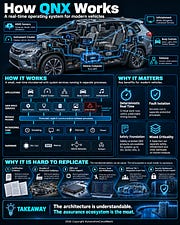
The microkernel is visible. The assurance ecosystem is the barrier competitors must recreate.
Executive Briefings
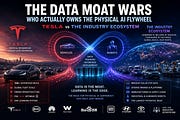
The 80-entity ecosystem reveals a contest for the infrastructure beneath robot learning and deployment
Physical AI
Physical AI is making robot skills cheaper to create faster than manufacturers can make those skills safe, repeatable, measurable, and certifiable.
Physical AI
Why World Labs just made real-world observation reusable, how it does it, and why that breakthrough still solves only half of the robotics problem.
Automotive
Automakers are moving from software velocity to controlled fleet operations
Physical AI
Hardware, Not Logic, Is the True Humanoid Bottleneck
Automotive
Why the next competitive advantage in automotive and manufacturing AI will belong to whoever can validate and ship the fastest, not whoever trains the smartest model
Physical AI
Collaborative SLAM has been proven in demanding field trials. At fleet scale, it is still far from the default architecture.
Physical AI
Robotics funding just hit an all time high. Here is what the five layers of Physical AI actually do, and who is building each one.
Physical AI
Humanoid robots are not just an AI race. They are a materials race.
Physical AI
A deep dive on NRE-skin, artificial nociception, and why humanoid robots may need distributed protective reflexes before they can safely work around people.
Physical AI
NVIDIA’s robot safety stack splits between Linux and QNX, the same fight SDV compute just had.
Automotive
A sixteen-year-old kernel bug shows why a cloud hypervisor cannot enforce vehicle safety isolation.
Physical AI
Two Japanese companies control roughly half the market for the mechanism that lets robots move, and Chinese suppliers are closing in fast.
Physical AI
Why reliable motion, not bigger models, may determine who wins the race to Physical AI.
Physical AI
Touch may be the missing sense that turns robots from impressive machines into useful helpers.
Industry Events/Shows
The industry is learning that the camera inside the car may be as important as the sensors outside it, and far harder to make people comfortable with.
Industry Events/Shows
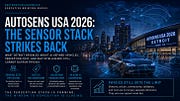
The industry wants to move from sensors to AI-defined vehicles. Detroit showed why physics, perception, validation, and infrastructure are still refusing to get out of the way.
Physical AI
Spatial AI is moving from demo worlds to real roads, robot fleets, and factory floors.
Automotive
RV Tech has validated OTA-capable traction control in Arctic conditions. The harder question is what safety teams can certify before ISO 26262 catches up.
Artificial Intelligence
Anthropic’s coding agent solved a permission and memory problem before a capability problem, and that order matters for automotive software.
Executive Briefings
Detroit showed that the AI-defined vehicle is not waiting on a bigger model. It is waiting on a cheaper, more robust, more defensible perception stack.
Automotive
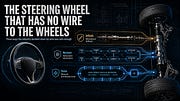
Infiniti, Nexteer, and Tesla all decided steer-by-wire was safe enough for production. What they disagree on is where safety actually comes from.
Physical AI
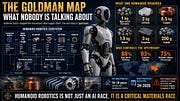
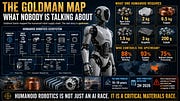
Goldman Sachs mapped the robotics ecosystem. The deeper story is not who builds the robots. It is who controls the materials that make them move.
Automotive
QNX Hypervisor is the clean answer when Linux can be treated as an isolated guest. NVIDIA just showed what the harder answer looks like when the safety boundary runs inside Linux itself.
Physical AI
Why physical AI shifts competitive advantage toward industrial incumbents, not away from them
Physical AI
Everyone is watching the robot. Almost nobody is watching what makes it move.
Automotive
What five industry leaders at IAA 2025 said about the road to AI defined vehicles
Automotive
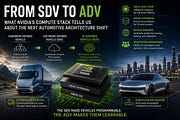
What NVIDIA’s Compute Stack Tells Us About the Next Automotive Architecture Shift
Automotive
Seven companies. Five dimensions. One ranking. The answers may surprise you.
Automotive
Why Automotive OEMs Are Positioned for Disproportionate Success in the Physical AI Era
Automotive
The Software That Was Supposed to Make Cars Better Is Making Them Worse
Automotive
The world’s most advanced robotaxi fleet halted service across five cities in four days. The reason should concern every AV program on earth.
Executive Briefings
China did not eliminate engineering time. It redistributed engineering pressure.
Automotive
Autoware Foundation is building end-to-end AI for driverless taxis using open-source world models and vision-language-action architectures.
Automotive
Google’s Gemini rollout is not just an infotainment update. It is a reminder that automakers still have to prove they can own the digital relationship inside the vehicle.
Automotive
Why a 100 vehicle shutdown in Wuhan may be the most important autonomous vehicle safety signal of the decade
Physical AI
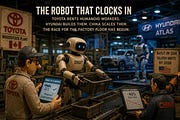
Humanoid robots are on the factory floor. The question is no longer whether they work. It is who gets to scale them first.