Physical AI Curated
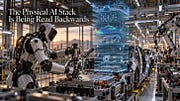
The Physical AI Stack Is Being Read Backwards
Physical AI is built from intelligence outward. Automotive and manufacturing deploy it from physics inward, where the real bottlenecks emerge.
The shift from digital intelligence to embodied intelligence. This section tracks the signals shaping robotics, autonomous systems, humanoids, sensors, actuators, simulation, edge computing, and the industrial systems that allow AI to perceive, move, and act in the physical world.
Physical AI Curated
Physical AI is built from intelligence outward. Automotive and manufacturing deploy it from physics inward, where the real bottlenecks emerge.
Physical AI Curated
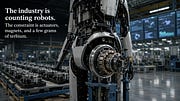
Stop Counting Humanoids. Count Actuators.
Physical AI
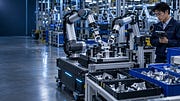
RobCo Alfie makes task variability a timely physical AI question. The factory test belongs in exceptions, quality acceptance, and total operating cost.
Physical AI
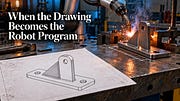
FANUC’s AI Welding Agent can write a weld program in the time it takes to photograph a drawing, and nothing in the announcement says who proves the weld is good.
Physical AI
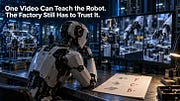
Physical AI is making robot skills cheaper to create faster than manufacturers can make those skills safe, repeatable, measurable, and certifiable.
Physical AI
Why World Labs just made real-world observation reusable, how it does it, and why that breakthrough still solves only half of the robotics problem.
Physical AI
Hardware, Not Logic, Is the True Humanoid Bottleneck
Physical AI
Collaborative SLAM has been proven in demanding field trials. At fleet scale, it is still far from the default architecture.
Physical AI
Robotics funding just hit an all time high. Here is what the five layers of Physical AI actually do, and who is building each one.
Physical AI
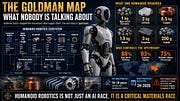
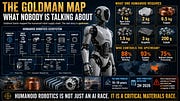
Humanoid robots are not just an AI race. They are a materials race.
Physical AI
A deep dive on NRE-skin, artificial nociception, and why humanoid robots may need distributed protective reflexes before they can safely work around people.
Physical AI
NVIDIA’s robot safety stack splits between Linux and QNX, the same fight SDV compute just had.
Physical AI
onsemi’s biggest acquisition isn’t just about growth. It’s a test of whether the future belongs to the best chip or the best integrated platform.
Physical AI
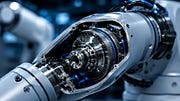
Two Japanese companies control roughly half the market for the mechanism that lets robots move, and Chinese suppliers are closing in fast.
Physical AI
Why reliable motion, not bigger models, may determine who wins the race to Physical AI.
Physical AI
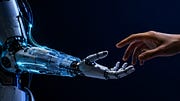
Touch may be the missing sense that turns robots from impressive machines into useful helpers.
Physical AI
Spatial AI is moving from demo worlds to real roads, robot fleets, and factory floors.
Physical AI
Goldman Sachs mapped the robotics ecosystem. The deeper story is not who builds the robots. It is who controls the materials that make them move.
Physical AI
Why physical AI shifts competitive advantage toward industrial incumbents, not away from them
Physical AI
Everyone is watching the robot. Almost nobody is watching what makes it move.
Physical AI
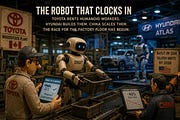
Humanoid robots are on the factory floor. The question is no longer whether they work. It is who gets to scale them first.