Executive Briefings
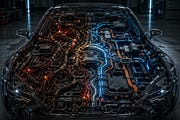
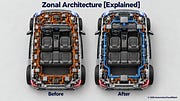
Zonal Architecture [Explained]
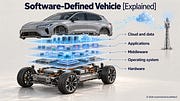
The shift that lets software run the car is, underneath, a story about copper, fuses and who builds the boxes.
Everything AutomotiveCloudWatch has published under this tag, newest first.
Executive Briefings
The shift that lets software run the car is, underneath, a story about copper, fuses and who builds the boxes.
Executive Briefings
Every automaker uses the phrase. No standard defines it. The architecture behind it decides which carmakers will still control their own products in ten years.
Technology & Cloud
An open-source agent took five automotive requirements to five passing tests in under nine minutes. The more important result is what those five green checks cannot tell you.
Automotive
The software-defined vehicle is sold as apps and over-the-air updates. The real contest is one layer down, where certifiable modeling code collides with neural perception.
Automotive
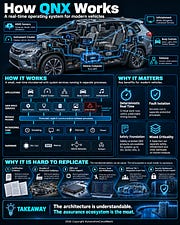
The microkernel is visible. The assurance ecosystem is the barrier competitors must recreate.
Executive Briefings
The 80-entity ecosystem reveals how training, simulation, safety and vehicle compute are converging around one cloud-to-car architecture
Artificial Intelligence
OpenShell can restrict what an agent touches. Sentry proposes a second, independent observer in the infrastructure. The harder question is who grants authority when software reaches the factory floor.
Executive Briefings
What TypeSafe's System One model actually does, where it fits in fleets, factories and robots, and where it does not belong yet.
Automotive
Xi lands in Washington tomorrow with the Chinese car question at the center of the table. Three regimes already on the books, and one quiet trade review running to 2036, have mostly decided it.
Automotive
Cloud, edge, or machine? Three questions eliminate most of the confusion.
Artificial Intelligence
TypeSafe AI’s new model abandons text generation entirely, and that refusal may reshape how real systems get built.
Physical AI
Physical AI is built from intelligence outward. Automotive and manufacturing deploy it from physics inward, where the real bottlenecks emerge.
Automotive
NVIDIA’s reasoning model is being read as a chatbot behind the wheel. Its own architecture and its own numbers say the expensive thinking happens before the vehicle ever ships.
Automotive
Zonal E/E design removed 600 meters of copper from the car. It did not remove the periodic table.
Automotive
Automakers are moving from software velocity to controlled fleet operations
Automotive
Why the next competitive advantage in automotive and manufacturing AI will belong to whoever can validate and ship the fastest, not whoever trains the smartest model
Automotive
Every layer of the modern vehicle, the code, the chips, the battery, the testing, is now an AI decision. Here is what the five layers actually do, and who is building each one.
Automotive
A sixteen-year-old kernel bug shows why a cloud hypervisor cannot enforce vehicle safety isolation.
Automotive
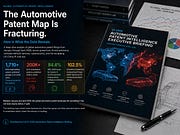
A patent search that kept coming up empty revealed something more interesting than the patent everyone expected to find.
Physical AI
onsemi’s biggest acquisition isn’t just about growth. It’s a test of whether the future belongs to the best chip or the best integrated platform.
Automotive
The trade agreement designed to stabilize regional manufacturing is now becoming the instrument that may destabilize investment planning across the automotive supply chain.
Industry Events/Shows
The industry is learning that the camera inside the car may be as important as the sensors outside it, and far harder to make people comfortable with.
Industry Events/Shows
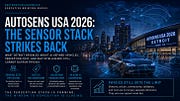
The industry wants to move from sensors to AI-defined vehicles. Detroit showed why physics, perception, validation, and infrastructure are still refusing to get out of the way.
Automotive
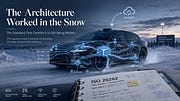
RV Tech has validated OTA-capable traction control in Arctic conditions. The harder question is what safety teams can certify before ISO 26262 catches up.
Artificial Intelligence
The bottleneck in AI is no longer coding. It’s context, requirements, and organizational memory. Automotive has seen this before.
Artificial Intelligence
Anthropic’s coding agent solved a permission and memory problem before a capability problem, and that order matters for automotive software.
Executive Briefings
Detroit showed that the AI-defined vehicle is not waiting on a bigger model. It is waiting on a cheaper, more robust, more defensible perception stack.
Automotive
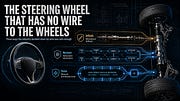
Infiniti, Nexteer, and Tesla all decided steer-by-wire was safe enough for production. What they disagree on is where safety actually comes from.
Executive Briefings
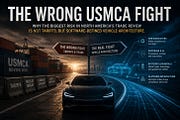
The biggest risk is not tariffs. It is the collision between trade policy and software-defined vehicle architecture.
Physical AI
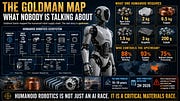
Goldman Sachs mapped the robotics ecosystem. The deeper story is not who builds the robots. It is who controls the materials that make them move.
Automotive
QNX Hypervisor is the clean answer when Linux can be treated as an isolated guest. NVIDIA just showed what the harder answer looks like when the safety boundary runs inside Linux itself.
Automotive
What five industry leaders at IAA 2025 said about the road to AI defined vehicles
Automotive
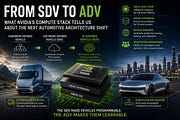
What NVIDIA’s Compute Stack Tells Us About the Next Automotive Architecture Shift
Automotive
Seven companies. Five dimensions. One ranking. The answers may surprise you.
Executive Briefings
Fei-Fei Li’s world model taxonomy and what it means for automotive and manufacturing
Artificial Intelligence
The memory shortage driving up car, phone, and medical device prices is not a supply chain glitch. It is a structural reordering of who the semiconductor industry serves.
Automotive
Why Automotive OEMs Are Positioned for Disproportionate Success in the Physical AI Era
Automotive
The Software That Was Supposed to Make Cars Better Is Making Them Worse
Automotive
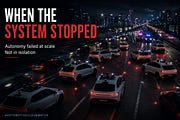
The world’s most advanced robotaxi fleet halted service across five cities in four days. The reason should concern every AV program on earth.
Executive Briefings
China did not eliminate engineering time. It redistributed engineering pressure.
Automotive
Autoware Foundation is building end-to-end AI for driverless taxis using open-source world models and vision-language-action architectures.
Automotive
GM just told Wall Street that nearly 90 percent of its autonomy code is written by AI. That number is either the most important disclosure in automotive engineering this decade, or the most dangerous.
Executive Briefings
Four months. Five domains. One fracture line running through the entire industry.
Automotive
The connected car was sold as a convenience. It was built as a surveillance platform. And now it is becoming a weapon.
Executive Briefings
The January 2026 FTC final order against GM and OnStar is not a story about one company's mistake. It is the enforcement template regulators will use against every automaker that collected driver data
Automotive
How a 1986 protocol scaled to 536 million unique IDs, and why no one in the room is asking about it
Automotive
Google’s Gemini rollout is not just an infotainment update. It is a reminder that automakers still have to prove they can own the digital relationship inside the vehicle.
Automotive
Why a 100 vehicle shutdown in Wuhan may be the most important autonomous vehicle safety signal of the decade
Executive Briefings
Five signals from January through March 2026 that every automotive executive needs to read before Q2 planning closes.
Automotive
Why Automotive Organizations Need to Move to Rust Now
Automotive
Why local-first intelligence is becoming the architecture that matters
Automotive
Why one of the auto industry’s oldest ideas still matters in the age of software, batteries, and AI
Automotive
Two engineers. One open-source repo. A fork that changed everything. And a clue about who actually controls the future of AI tooling for the world's most regulated software industry.