Signals · Article · Automotiveシグナル · 記事 · 自動車
Type Approval and Homologation [Explained]
Before a car can be sold, a government must accept that it meets the rules. Each market does it differently, and software is turning a one-time approval into a continuing obligation.

On 3 June 2024, Japan’s transport ministry said that five more carmakers, including Toyota, Honda and Mazda, had committed misconduct in the tests used to certify their vehicles, covering 38 models. One of Toyota’s cases involved a rear impact test run with a barrier of about 1,800 kilograms when the rule specified about 1,100 kilograms, according to Nippon.com. The test was harsher than required.
Toyota still suspended production of three models. In Japan’s system, manufacturers run many certification tests themselves under the ministry’s oversight, and the integrity of that process is what the approval rests on. A test that does not follow the prescribed method undermines the approval even when the car would have passed.
That is what homologation is about. It is the process by which a vehicle type is shown to meet a market’s technical rules before it is sold, and each major market does it differently.
This article explains the two main philosophies, how approval works in the European Union, what changed after the diesel emissions scandal, how the United Nations system and mutual recognition work, how the United States self-certifies, how China and Japan approve vehicles, how software is changing approval and what it costs. The specific UN rules for cybersecurity, software updates and automated driving are covered in the vehicle cybersecurity regulation, over-the-air updates and autonomous driving explainers in this series.
Two philosophies
Most of the world uses type approval. A government authority, or a testing organization it designates, checks a vehicle type against the rules before it can be sold, and the manufacturer must then show that series production matches the approved type.
The United States and Canada use self-certification instead. The manufacturer certifies that its vehicles meet the federal motor vehicle safety standards, and the National Highway Traffic Safety Administration enforces afterward through its own tests, defect investigations and recalls.
Neither system is lax. They put the checking at different points, one before sale and one after, and they place different weight on the regulator’s own testing and on the manufacturer’s honesty.
How approval works in the European Union
In the EU, approval is granted by a national approval authority, such as Germany’s KBA, and is then valid across the union. Magna, whose homologation group advises carmakers entering Europe, describes the sequence. The authority first assesses the company and its plant, including a production control plan, then individual systems such as crash protection, braking, lighting and assistance systems are approved, and only then is whole vehicle type approval granted on a vehicle representative of series production.
The authority nominates technical services to run the tests on its behalf. Magna says choosing the right authority and technical service is often difficult for new Chinese carmakers entering the EU, and that moving a new type to another country’s authority means the company and plant must be checked again there.
The manufacturer carries the burden of proof. According to the law firm Reuschlaw, if authorities cannot verify compliance from the information provided, the vehicle is treated as non-compliant, which makes complete documentation essential.
Magna estimates that EU approval typically takes about six months from a fully developed, test-ready vehicle. The authority’s processing time cannot be shortened much, but preparation can, for example by combining development and homologation tests on pre-series vehicles.
What changed after the diesel scandal
The diesel emissions scandal exposed a weakness in the old system, in which only the authority that approved a vehicle could act against it. The EU responded with Regulation (EU) 2018/858, adopted on 30 May 2018 and applied from 1 September 2020.
The regulation requires technical services to be independently audited, subjects national authorities to peer review and requires each member state to check vehicles already on the market, at a rate of at least one test for every 40,000 new vehicles registered the previous year, with at least a fifth of those tests covering emissions requirements, according to Reuschlaw.
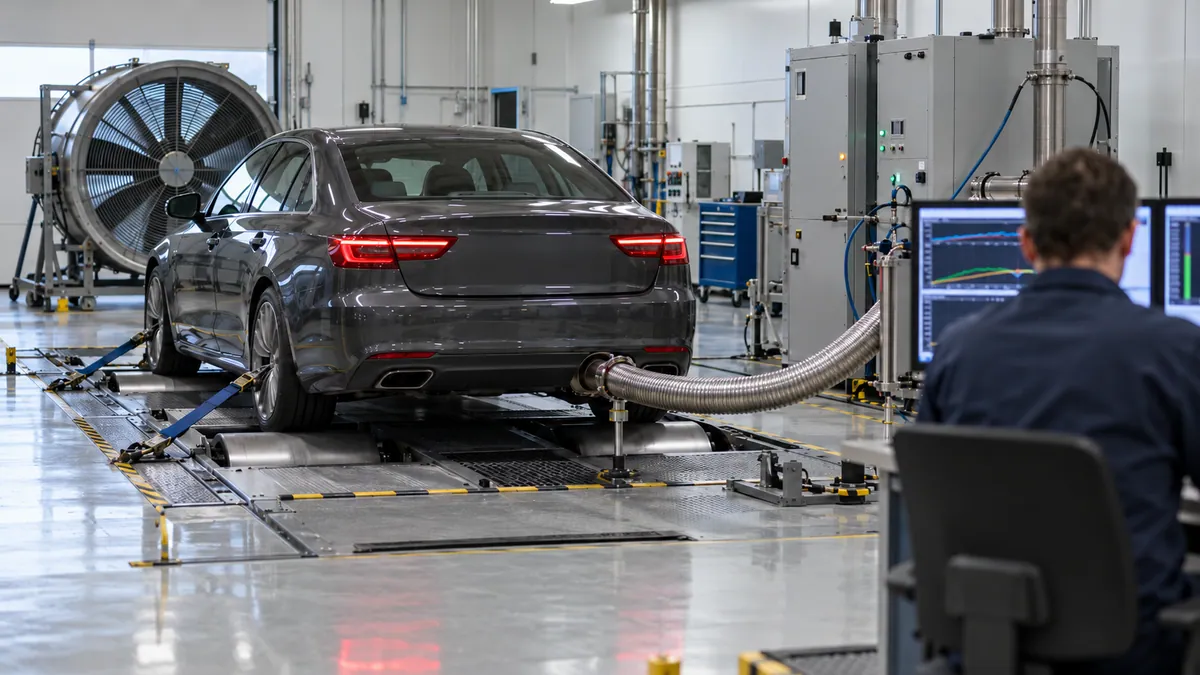
The European Commission also gained powers to carry out its own checks, order recalls across the union and impose fines of up to €30,000 per non-compliant vehicle. Approval became the start of oversight rather than the end of it.
The UN system and mutual recognition
Much of the world’s vehicle regulation is written at the UN’s World Forum for Harmonization of Vehicle Regulations, known as WP.29. Under the 1958 Agreement, contracting parties adopt UN Regulations covering test requirements, approval procedures and conformity of production, and accept each other’s approvals. A European Commission page lists 64 contracting parties and 164 UN Regulations, but that page is out of date, and more recent counts put the number of UN Regulations above 170.
A separate 1998 Agreement produces Global Technical Regulations, which harmonize requirements without mutual recognition of approvals. More recent counts put the 1998 Agreement at about 40 parties and 24 such regulations. That structure allows countries that do not use type approval to take part in writing common rules.
The ambition of a single worldwide approval led to UN Regulation No. 0, which created international whole vehicle type approval. It was adopted at WP.29 in November 2017 and took effect in mid-2018, with Japan, which proposed it, hoping that Japan and Europe would accept each other’s whole vehicle certificates.
Progress has been limited. The European Business Council in Japan said in January 2025 that use of the regulation had not progressed because not all systems are covered, and that Japan and Europe should aim to establish complete mutual recognition of whole vehicle approval. Emissions and fuel consumption are among the areas still handled separately.
Self-certification in the United States
In the United States, enforcement runs largely through recalls. NHTSA’s annual report for 2024 counted 1,073 recalls covering about 35 million units. Of those, 273 were compliance recalls for failing to meet federal standards, and only 44 were influenced by NHTSA, meaning most recalls were started by manufacturers themselves.
NHTSA’s position is that vehicles that cannot meet the standards as written, such as robotaxis without steering wheels or pedals, need an exemption. On 30 July 2026, NHTSA said it had allowed Zoox to deploy robotaxis commercially under a temporary exemption covering up to 2,500 vehicles a year for two years, while updating its guidance for such exemptions. Tesla took the other route. It self-certified its Cybercab, which has no manual controls, as meeting every applicable standard without an exemption, and in September 2026 NHTSA opened an audit and issued a special order questioning that certification, Electrek reported.

The self-certification model therefore still has gates. A novel vehicle that certifies itself to standards that never imagined it can expect the regulator to challenge it, as the end-to-end driving and SOTIF explainers in this series describe for automated driving.
China’s dual system
China runs two approval tracks. China Compulsory Certification, known as CCC, requires type testing and factory inspection for vehicles and listed parts, while a separate listing in the Ministry of Industry and Information Technology’s public announcement is required before vehicles can be sold, according to In Compliance Magazine.
Software is now part of that approval. A February 2025 notice from the ministry and the market regulator requires over-the-air updates to be filed and requires a permit when an update changes a vehicle’s main technical parameters, according to the law firm CMS, and the mandatory standard for software updates, GB 44496-2024, applies to new type approvals from 2026. The over-the-air updates explainer covers China’s rules in more detail.
Japan’s certification scandals
Japan’s certification system relies heavily on manufacturers carrying out tests and inspections under the ministry’s oversight. A series of revelations from 2022 onward badly damaged that trust.
A third-party committee reported in December 2023 that Daihatsu, a Toyota subsidiary, had 174 cases of misconduct across 64 models, including vehicles sold under Toyota, Mazda and Subaru badges, going back to 1989, according to The Drive. In January 2024, the transport ministry revoked the type designation of the pickup truck versions of three commercial models, the Daihatsu Gran Max, Toyota Town Ace and Mazda Bongo, according to Wapcar.
The ministry then ordered investigations at 85 companies. In June 2024 it named Toyota, Honda, Mazda, Yamaha and Suzuki, and on 31 July it issued Toyota a correction order after finding further cases, which brought Toyota’s total to 14.
Many of the cases involved tests run under different or harsher conditions than required, and Toyota told owners they did not need to stop using their vehicles. The failure was in the integrity of the certification process, which in a type approval system is the product being sold to the public.
Japan has since moved to simplify approval in another direction. On 16 February 2026, the transport ministry launched a system to accept US compliance documentation for US-built vehicles without additional domestic testing, according to Jiji Press, in a step tied to the July 2025 agreement between the two countries.
Software makes approval continuous
Type approval was designed for products that did not change after sale. Cars now do. Under UN Regulation 156, the software relevant to a vehicle’s approval is identified so that updates affecting approved systems can be tracked and, where needed, approved, as the over-the-air updates explainer describes.
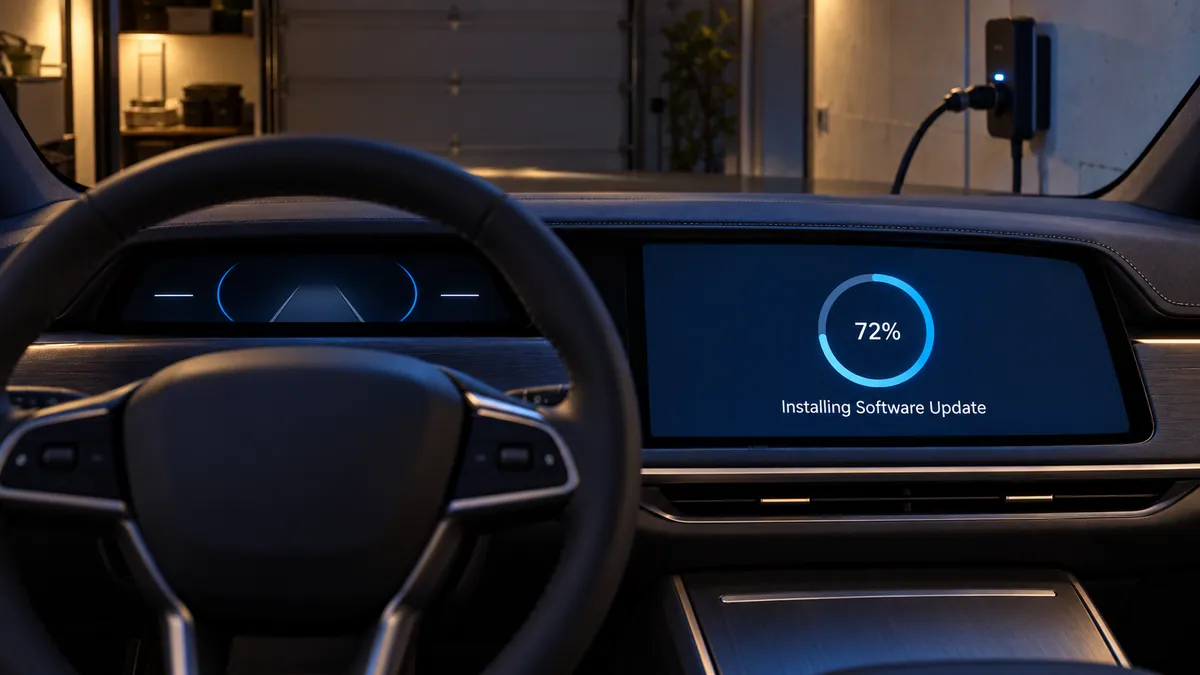
China’s filing rules take the same idea further, and the EU has a separate procedure for approving the automated driving systems of fully automated vehicles built in small series under Regulation 2022/1426. In each case the approval follows the software for the vehicle’s life rather than ending at the factory gate.
What homologation costs
Time is the clearest cost. Magna’s estimate of about six months for EU approval applies to a vehicle that is already fully developed, and each additional market adds its own documents, tests and local requirements.
I could not find a reliable published figure for the cost of homologating a model across major markets, and carmakers rarely disclose it. What is clear is that duplication is expensive, which is why mutual recognition matters and why its gaps between Japan and Europe still frustrate exporters.
The tradeoffs run both ways. Type approval provides a check before sale but, as Japan showed, can fail quietly when it relies on manufacturers’ own tests. Self-certification is faster but, as the US recall figures show, depends heavily on manufacturers finding and reporting their own problems.
What type approval really means
Type approval is the process by which a government accepts that a vehicle type meets its rules, either by checking before sale, as in Europe, Japan and China, or by enforcing after sale, as in the United States. Since the diesel scandal and Japan’s certification scandals, the emphasis has shifted from a one-time approval to continuing oversight, and software updates are making that shift permanent.
The useful questions for any vehicle program are which authority and technical service will approve it in each market, how conformity of production will be demonstrated, which approvals can be recognized across markets and which must be repeated, how software updates will be filed or approved after launch, and whether any novel feature needs an exemption.
Words you will hear
Type approval. Government confirmation, before sale, that a vehicle type meets the technical rules.
Self-certification. The US model in which the manufacturer certifies compliance and the regulator enforces afterward.
Whole vehicle type approval. Approval of a complete vehicle type, built on earlier approvals of its systems.
Technical service. A testing organization designated by an approval authority to run approval tests.
Conformity of production. The requirement that series-built vehicles match the approved type.
1958 Agreement. The UN treaty under which countries adopt UN Regulations and recognize each other’s approvals.
Type designation. Japan’s form of type approval for vehicles built in volume.
This article is part of the AutomotiveCloudWatch Explained series. Before it, read Software-Defined Vehicle [Explained] and Zonal Architecture [Explained].
If this helped, subscribe free at automotivecloudwatch.com to get each new explainer when it publishes.
All opinions are my own and do not reflect those of my employer.
Related research


Get the next Executive Briefing by email
Each new briefing, in your inbox.
Subscribe
